

Role Model of the Week: Aphra Behn, The First Female Author
Aphra Behn is considered to be the first female author of our time. She was revolutionary in her boldness and fascinating in her pursuit of knowledge considering she had no formal education. Learn more about Aphra Behn today.

If you’ve ever had the privilege of sitting down to read a good book, you have known one of life’s most adventurous and exciting hobbies. From the youngest readers to experts of human language, there is no doubt a priceless sensation that comes from reading the written word.
In 2021, a person could walk into a bookstore and find a host of books authored by women with a variety of subjects to select from. There are books dedicated to working mothers and books created solely for the empowerment of women of all ages and backgrounds.
However, it was not always like this and the strides women have made in the literary world must be acknowledged as a feat in itself. From J. K. Rowling making a fortune from her infamous Harry Potter series to Shonda Rhymes creating television shows that have captivated the world for decades, women are becoming more prominent in literary fields.
But this was not always the case for young women centuries ago who aspired to be writers. The importance of their triumphs long ago should not be forgotten especially in how they have affected the lives of young girls in the 21st century.

This article focuses on one of history’s most talked-about female authors: Aphra Behn. A fascinating woman whose passion for writing can only be rivalled by the relentless pursuit of her dreams. She is regarded as the first female author to write and make a living from her work. The sheer volume of her writing was astounding from poetry to playwriting and up until 1970, her work was reproduced into plays, shows and articles.
Today we focus on what she would have had to face in an industry that simply was not prepared for a woman who was not only adept at communication but was bold enough to take chances on herself. She made her own way at a time where women rarely had the opportunity to do anything but get married and have children. Below are three reasons why Aphra Behn is this week’s role model.
She would have experienced Imposter Syndrome to the MAX!
Not much is known about the early years of Aphra Behn. She was from a poor background and few people know the history of her parentage. She would likely have missed out on the tutors and education wealthier children had.
Many of us experience imposter syndrome despite our education as a persistent feeling that our successes aren’t deserved. One of the greatest challenges Aphra Behn would have faced would have been her lack of training in any formal language.
This was a time when women were not allowed entry into school in any shape way or form. It was a feat to enter the writing world as a woman simply because they literally lacked the necessary skills required to speak about the subject matter they were interested in.
Talk about imposter syndrome! The feeling of inadequacy would have been hard to shake given Aphra Behn’s lack of formal education. The reason her story is so empowering is that regardless of how she felt at the time, she's is regarded as one of the first female professional writers of the 18th century and attributed with being political & satirical in her writing.
It is quite impossible to measure how the lack of schooling affected Aphra Behn’s writing career as we will never know what she could have been if she were allowed the same education as her male peers at the time. She herself expressed frustration at her lack of knowledge in subjects like Greek and Latin which many men were taught at the time.
Despite her lack of formal training, Aphra Behn learned the skills she needed to be well known amongst her peers as someone who could be trusted to translate famous literary pieces in a language she was never taught.

2. She Faught For Her Passion As a Writer
Aphra Behn lived in a truly unique time in that although she was extremely popular, she had to make tough choices about what she could write about. Like many moments in our historical timeline, a woman's body was up for discussion and the 18th-century readers were no different in their general interests. It was a time when women who wrote were often assumed to be ladies who had bad reputations among their friends and family and the same was said for Aphra Behn.
Most popular works written for or about women at the time were not political or scientific, they were very much about focusing on what women looked like and the roles their bodies played in general society. By her own admission, Aphra Behn wrote literature that was often contrary to popular beliefs about women of the time. She challenged the ideas that insisted that a woman’s place in the world rested solely on having children and staying at home and she caused quite the stir amongst the general public.
One of the reasons Aphra Behn relied on public popularity so heavily was because most of the money that was made by authors at the time came from government awards and lectures which were closed to women while the general market was not. Therefore, she wrote what was popular for the public in order to survive as opposed to jumping into literary academia like she wanted to.
Aphra Behn could have given up all pursuits of becoming a writer but she persevered in a way that many of us can learn from today. She was so good at her craft, she was able to captivate the attention of her countrymen and women by writing subject matter she did not always feel passionate about. She fought for her livelihood even when it did not turn out to be exactly what she wanted and in doing so, she paved the way for any woman who would aspire to be writers today.

3. She Had Haters & Still Managed to Be Respected
Since Aphra Behn wrote confrontational and satirical pieces about politics and the female form, she was often ill-spoken of amongst her peers. In other words, she had a lot of haters. Yet despite the heavy backlash she faced, she was one of the most popular writers of the restoration era and was fearless in her pursuit of expert craftsmanship in her work as an author.
In fact, the first play she ever wrote was extremely controversial, extremely feminist and an absolute success. It was called The Forcd’ Marriage and it centred around a girl who was doomed to marry a man she did not love, a fate that was common for most women in that day and age. Although Aphra Behn was aware of the controversy she would cause, she wrote a play that challenged the way people thought of marriage in the 1800s. She brought to light the pain and anger that went along with arranged marriages of the time, especially for young women who often had to marry to survive.
The play was a success with Aphra-Behn gathering large audiences who were captivated by the in-depth set of emotions that she was able to express. The feeling of hopelessness that the characters all felt at not being with the ones they loved was a sentiment everyone could relate to.

Conclusion: Just Do It, No Matter What
Aphra-Behn willingly wrote about touchy subjects at a time when she was already thought to be a woman of bad reputation simply because she was an author. As one of the first-ever published female authors, she is an inspiration and showed the need for representation in books for people of all genders, ages and backgrounds. So today our role model is Aphra Behn, because without her, many women would never have been given the right to have their stories published freely in books.
References:
Bowditch, C., & Hobby, E. (2020). Aphra Behn's 350th Anniversary and Some Radical Re-imaginings. Women's Writing : The Elizabethan to Victorian Period, 27(3), 265-274.
Kewes, P. (2002). Aphra Behn's Afterlife. The Review of English Studies, 53(210), 260-262.
Ogilvie, M. (1986). Women in science : Antiquity through the nineteenth century : A biographical dictionary with annotated bibliography. Cambridge, Mass.: MIT Press.
Three Reasons Why It's So Hard For The Public To Trust Research, COVID-19 or Anything Scientific
Just a few weeks ago we celebrated Father’s Day and all the dads who go the extra mile for their families! Check out this article on how paternal affection can encourage confidence and resilience!
This year has been a roller coaster and nothing disrupted our lives more than the pandemic that is COVID-19. What is fascinating is our reactions as a society to this nearly unpredictable situation. One of the things the pandemic has brought to life is the relationship between citizens, their science community and the disconnect that makes it difficult for lawmakers to make decisions that are good for everyone.
We are quite used to the seamless functioning of life in the Western world that the effort that goes into developing useful technology often goes ignored. If the computer does not work we take it to the store, if the Wi-fi is down, we call IT. Everything is so functional that the science behind the technology is of no consequence and that means it is working as intended. Very few people want to know how their phones work, they just want to be able to order Uber Eats when they feel like it! There is a constant flow of scientific knowledge in everything we do, however, there is rarely any time to reflect on the amazing things we have accomplished through the STEM fields.
Science and technology are so intertwined in our everyday lives that it is a simple thing to ignore how much we rely on the expertise of scientists and engineers alike. I rarely worry about the intricate workings of my car or the amount of research that went into keeping me as safe as possible when behind the wheel. We simultaneously accept and reject information from the science community so quickly, it is a wonder that there is any trust on either side. In the quest to connect science and my everyday life, the things I have found most important are clarity of language, the complex nature of our belief systems and the idea that facts don't mean much in our vast world of information. [3]

Clarity In Language
The concept of arguing has always fascinated me. I learn things about myself as I express my thoughts and it often leads to reflection about whatever topic I have talked about. Every so often I find myself disagreeing with someone and half way through I realize that the entire debate was over the definition of a word. So often in real life we never take the time to clarify the words we are using or interpreting.
Science can be so specific and involved that the same word can mean different things depending on the branch of science you are studying. For example, the Canada.ca website states “Canada has been using data and modelling throughout COVID-19 to guide public health action.” The word modelling has been used many times throughout the pandemic to justify how we make decisions for the safety of the public. But how many of us really know what a model is and understand the precarious feat of data analysis that is at best useful and at worst, completely wrong?
Without being fully aware of the scientific jargon being used in everyday news , it can be difficult to make informed decisions and have a true perspective regarding the amount of effort that goes into scientific research. I know it may seem tedious but it always helps me to take the time out and understand what is being communicated in terms that I understand. I believe it would go a long way in connecting the science community and society as a whole.

Lack Of Trust:
“Really Sean? An alligator chased you on a Florida golf course?”
How often have you been the recipient of a story so ridiculous you couldn't help the twinge of doubt that crept into your mind? Science is like that except, instead of using words to convince you, they use numbers and data analysis in a creative dance. The problem is that no one else can hear the music but scientists. And in a world jam packed with information, we are presented with so many concepts, it is hard to know what is and isn’t accurate.
One of the main issues is the lack of trust in the media as a whole. Our involvement in an issue is also more likely to determine how much we trust a media source than the information itself. [1] It is particularly important for us to remember how our own perception can skew how much we trust the information that is presented to us.
In addition to perception, research shows that if a society does not share the values that generate science research, it is difficult to gain the public's trust. [1] Science can often seem like a secret world and , it is hard for the public to believe in something they have nothing in common with. However, we have to think of all the wonderful inventions that have been made possible by the creative endeavour of experimenting.
Although it would not be wise to blindly trust science, I recommend reflecting on all the things we use that started off as a simple experiment. Think of wi-fi or self driving cars and trust that although scientists aren't always accurate, they are constantly making extraordinary efforts to look for truths that will help us as a society.
Facts Do Not Matter All That Much
As an engineer, I tend to think that if only people saw the data, then they would believe in whatever concept science was trying to convey. However, nothing could be further from the truth. One of the main issues is the dynamic nature of science and the tendency for conclusions to shift when presented with more information. Essentially, science is not an exact science save for those few laws that have been established for decades. Data itself can be complex and tricky to interpret, so a truth today can deviate based on new findings and that makes it extra hard for people to see a fact as a fact. [4]
In addition, there are parts of our minds that are harder to conceptualize. For example, research shows that when an individual's deep-rooted belief is challenged, chemicals associated with fear are released. Conversely, when someone's opinions are confirmed, chemicals associated with pleasure are released. (Vogel) There is nothing wrong with this mental play. Clinging to one’s beliefs is a survival mechanism born from the idea that being decisive can save your life. [4]
In this sense, the factual nature of an idea is unimportant because your brain is going to ask you to cling to your ideas because your brain wants to essentially keep you safe. We cannot remove this tendency completely but being aware of it may help us understand why it can be so hard to accept a new idea. [4]
What Can We Do To Better Understand What We Read
Step 1: Re-evaluate beliefs when presented with more information.
Step 2:Understand why or how you came to a certain truth
Step 3: Confront the barriers to a new mind-set and evaluate the positive or negative effects of changing your mind.
Thanks for reading and watch out for my Youtube video on Modelling during COVID coming out on Friday!
Citation
Kurtulmus, F. (2018). Well-ordered science and public trust in science. Synthese, 1-18
Lee, T. (2010). Why They Don’t Trust the Media: An Examination of Factors Predicting Trust. American Behavioral Scientist, 54(1), 8-21.
Master, Z., & Resnik, D. (2013). Hype and Public Trust in Science. Science and Engineering Ethics, 19(2), 321-335.
Vogel, L. (2017). Facts not enough to change minds about health myths. Canadian Medical Association. Journal, 189(46), E1430.
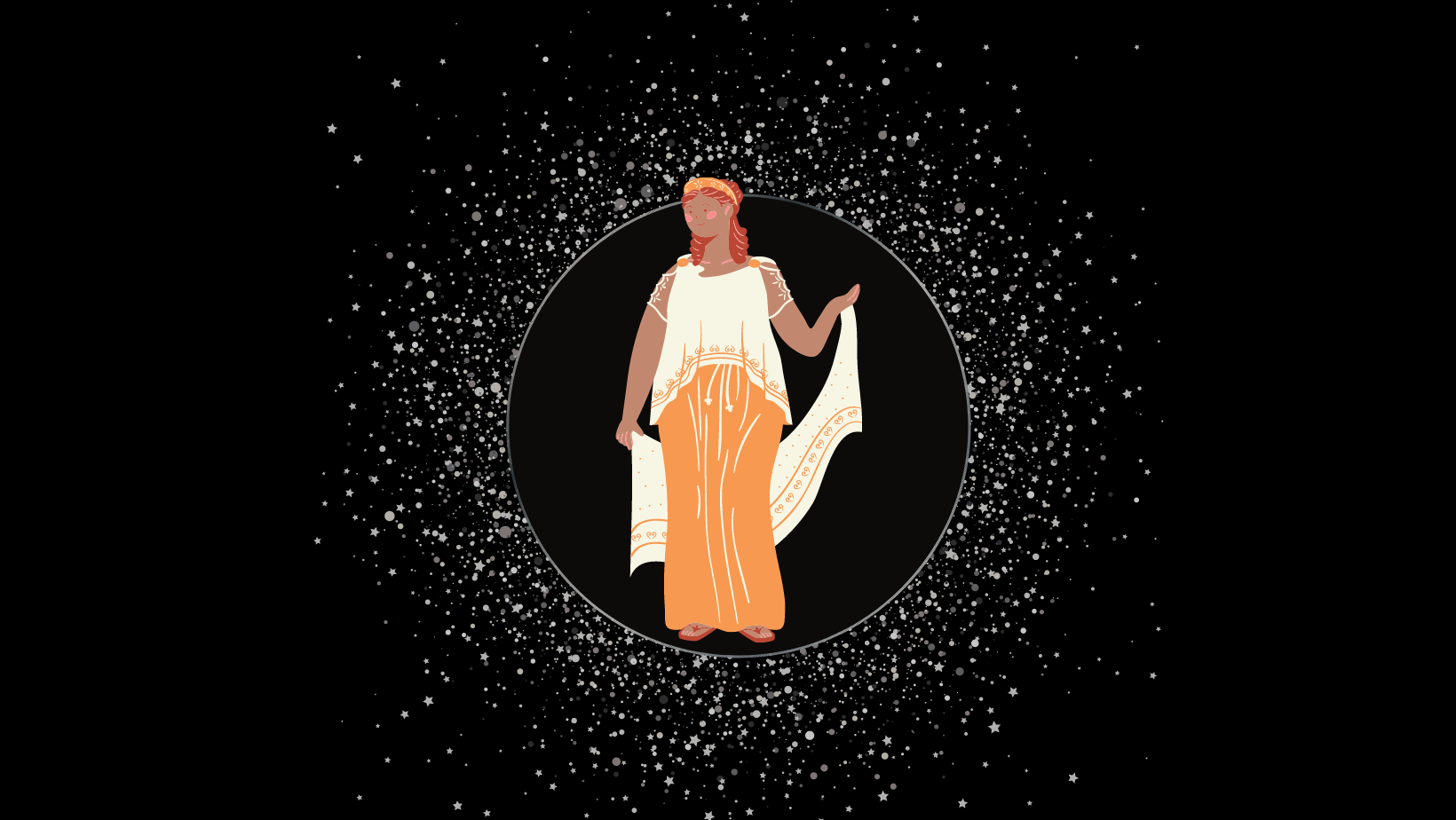
Role Model of the Week: The Tale of The First Recorded Woman in History who was an Astronomer
We’re all in this online school struggle together so check out a few tips that can help you have a smooth semester!
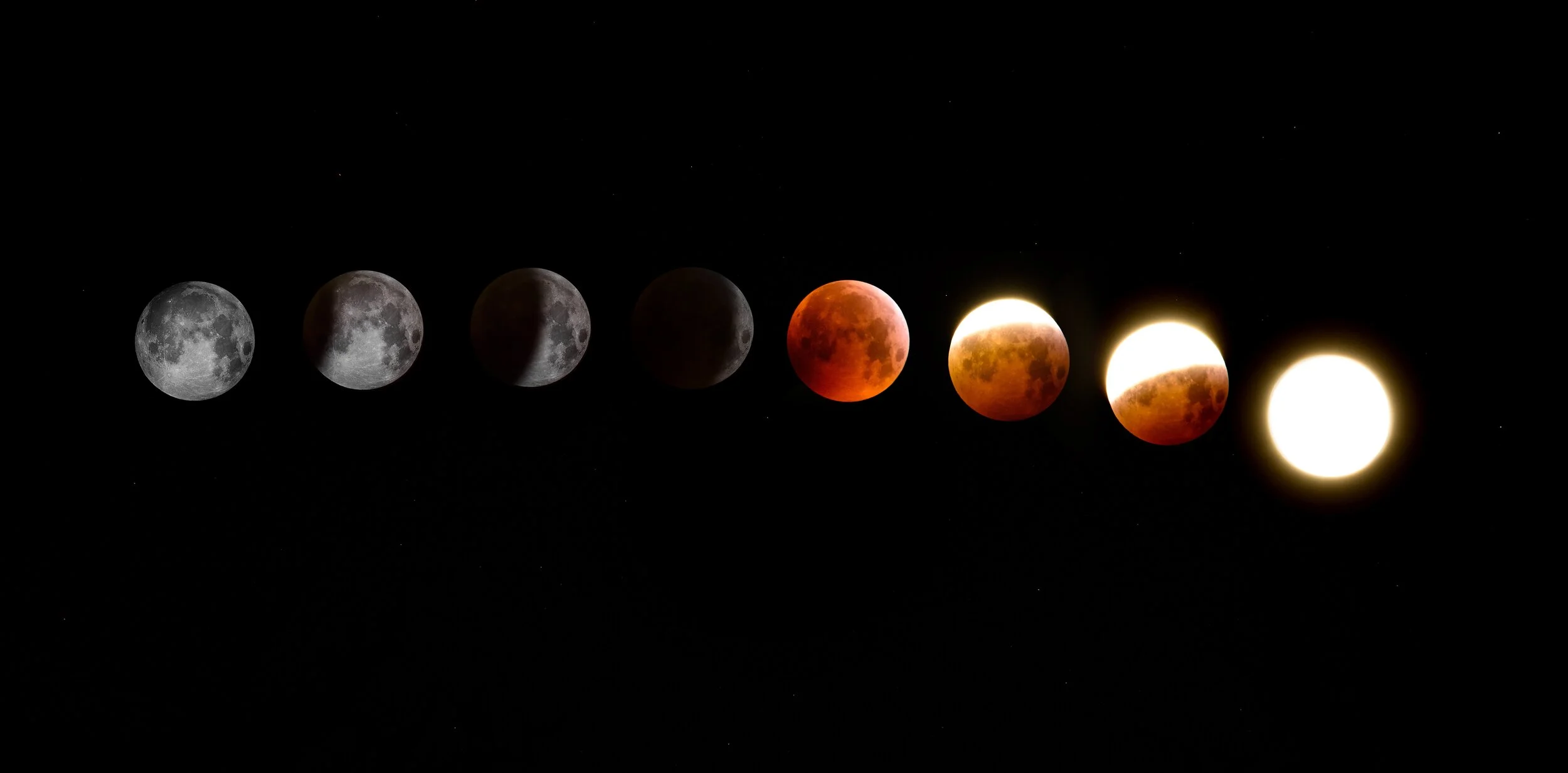
In the realm of celestial events, few phenomena capture the human imagination quite like solar eclipses. These rare occurrences, where the moon passes between the Earth and the sun, temporarily cloaking daylight in an eerie twilight, have fascinated societies for millennia. Today, as we witness yet another marvel of a solar eclipse, it's a moment to reflect on the legacy of one of the earliest known astronomers, a pioneer who once predicted these very events—Aglaonice of Thessaly. In our modern-day world, predicting an eclipse is a simple task that can be programmed into computer software. But before the invention of technology, computers and self-driving cars, women like Aglaonike studied the complexity of the skies and mapped them out accurately.

Algaonike: The Witch of Thessaly
What is an Eclipse?
To fully take in how amazing Aglaonice’s accomplishment was, let us dive a little deeper into the fascinating topic of how an eclipse happens. It’s the spinning, it all comes down to the spinning! Many large objects in our surrounding space are constantly spinning, including the Earth itself.
The Moon orbits the Earth, the Earth orbits the Sun with seven other planets, and the Sun orbits around the Milky Way. For an eclipse to occur one of two things must happen while all of these large spheres are moving.

Who Was Aglaonice?
Aglaonice, often hailed as the first female astronomer in Greece, lived around 2nd century BC. Her story is woven with the threads of myth and reality, a testament to her profound impact on the world of astronomy.
It was said that she could "charm the moon out of the sky," a poetic way of acknowledging her expertise in predicting lunar eclipses. This remarkable ability, in a time when the night sky held as much mystery as it did terror for the unknown, marked her as a figure of both awe and suspicion.
At a time when women were rarely allowed to own land, there was little incentive or opportunity for a young girl to learn about the movement of the planets and stars above her which makes her story even more compelling. This week’s blog is an appreciation for all the wonderful feats Aglaonice accomplished and the legacy she left as one of the first female astronomers.
A Tribute to Aglaonice’s Incredible Observation of Natural Phenomena
To convince an entire village of people that she controlled the moon, Aglaonice would have had to know precisely when the eclipse would happen and exactly where it would be visible to everyone. In addition to the location of the eclipse, Aglaonice would have needed to be aware of how rare total eclipses truly are. The reason for the rarity of these occurrences again has to do with all that spinning.
The moon's orbit is actually tilted with respect to the Earth's orbit. This means the moon could either pass below or above the Earth and Aglaonice would have needed to know that. Celestial bodies in outer space literally need to align for an eclipse to occur, making Aglaonice’s knowledge a feat of science for the time she lived in.
She would have needed a way to document the ever-changing perceptions that are involved with tracing the velocity, position and patterns of large-scale objects in motion. She would need maps, tables and star charts to accomplish many of these things. The sheer volume of information Aglaonice would have had to recall is amazing and hints at some form of data collection or note-taking on her part. Women had few rights at the time and were not allowed in school, making her accomplishments even more incredible!

Women in the Stars: The Legacy Continues
Aglaonice’s story has now faded into folklore with Plato referring to her as “the Thessalian enchantress, who as they say, brought down the moon from heaven at the risk of their own perdition.:” The only two true accounts of her life and parents can be taken from Plutarch and a scholar of Appolonios of Rhodes who both spoke of her as a sorceress. However, she left a legacy that changed the lives of many women today.
The tale of Aglaonice serves as a prelude to the symphony of women who have since carved their careers in astronomy. From Hypatia of Alexandria, who met a tragic end for her beliefs and teachings, to the modern pioneers like Vera Rubin, whose work on galaxy rotation rates provided key evidence for dark matter, women have continued to push the boundaries of space science.
Think of Katherine Johnson, a name synonymous with pioneering spirit and mathematical brilliance who forever altered the trajectory of space exploration and carved an indelible path for Black women in the realms of astronomy and STEM. As a mathematician at NASA, Katherine’s contributions were pivotal in the success of several key missions, including the first American manned spaceflight by Alan Shepard, and the iconic Apollo 11 moon landing in 1969. Johnson's extraordinary ability to calculate complex flight trajectories by hand, at a time when computers were in their infancy, earned her the moniker of "human computer."
Conclusion
Amidst this week’s solar eclipse, we celebrate Aglaonice and other women’s astronomical achievements and recognize the broader narrative of women in STEM. The path has been long and fraught with challenges, yet the progress is undeniable. Initiatives aimed at encouraging girls and young women to pursue STEM careers are more critical than ever, ensuring diversity of thought and innovation in tackling the mysteries of the universe and beyond.
References:
Ogilvie, M. (1986). Women in science : Antiquity through the nineteenth century : A biographical dictionary with annotated bibliography. Cambridge, Mass.: MIT Press.
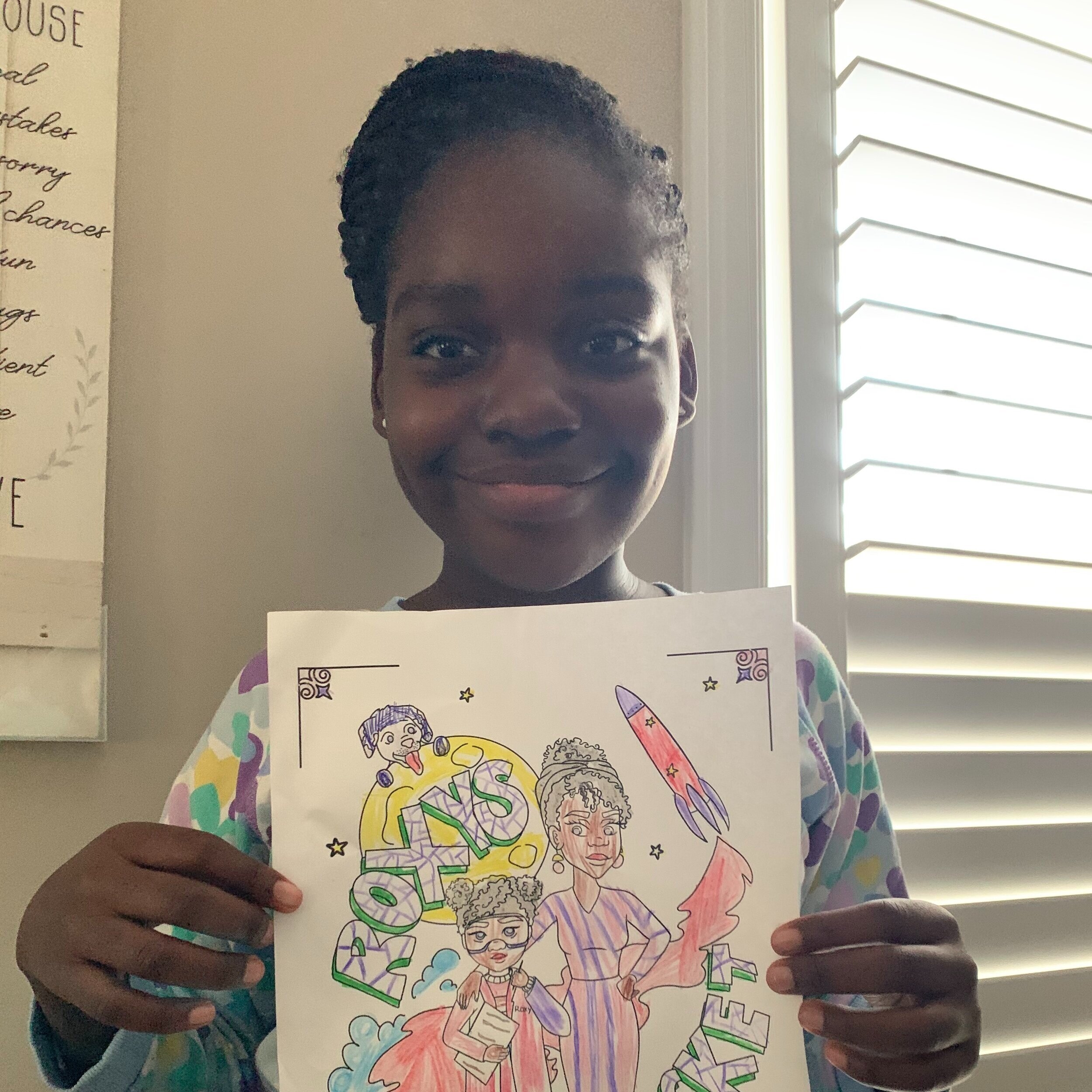
TheSTEMGirl Christmas Colouring Challenge Gallery
In our eyes, all participants were winners but here are the TOP 3 picks and some honourable mentions from the Christmas Colouring Challenge!

Three Tips For A Successful Online School Semester
We’re all in this online school struggle together so check out a few tips that can help you have a smooth semester!
This month has us embarking on a new school year different from any other we have had. Some of us are experiencing the change to online school firsthand and others are having to adapt to having kids home from school while trying to maintain a productive work environment. No matter where you are in this stage it is true that these are some of the most unusual circumstances educators and students have ever had to navigate.
I had no concept of what would make me succeed this new year in school so I did some research and found out about what really makes students succeed in distance education. I thought I would talk about what I found in case it might help someone else so feel free to share. Let’s get to it! The three most relevant factors that contribute to successful online learning are : social presence, self-regulation and communication.
Create Social Presence
Social presence in distance learning refers to the idea that students feel connected to one another despite being physically separate. A study conducted in the University of Massey in New Zealand noted that students who built online relationships through open discussion were more emotionally engaged in their online environments. Students who were engaged had similar attitudes toward their courses and similar learning outcomes even when using online tools to interact. The key is to create an environment where you're emotionally involved and invested in the outcome of your learning. As I go through school apart from my peers, it is clear how much of the educational experience is dependent on social contact but here are some things that have helped me so far:
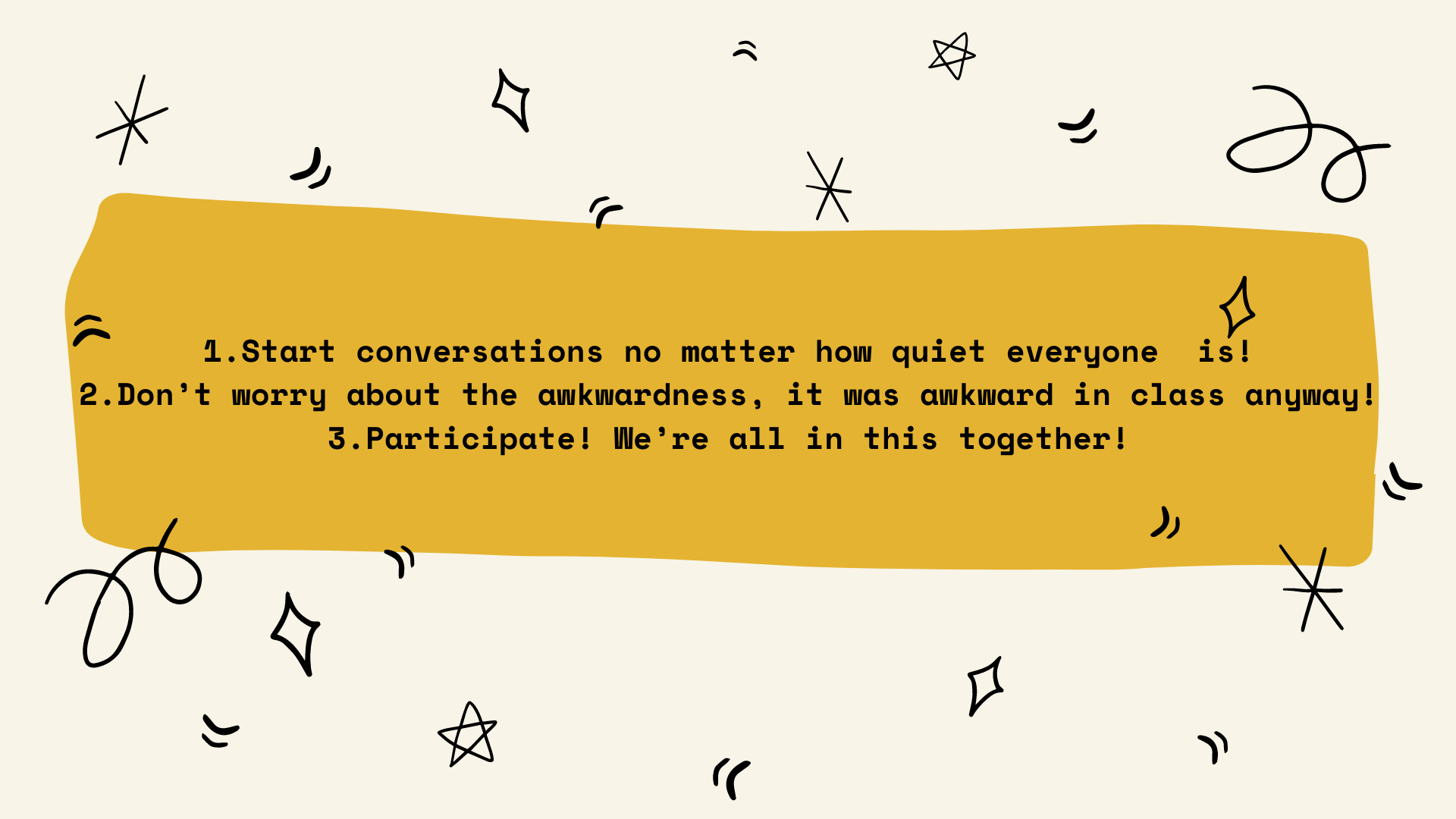
I am sure many other students feel the loss of the connection that comes with the evolution of a class dynamic. I miss talking to my peers after class about how ridiculous school is while soaking up the experience with all its oddities, but we must utilize the technology available to us. I have found video calling is just as effective in creating a sense of camaraderie with my peers as it is in real life.
Self Regulate AKA Stay Focused
One of the most fascinating things about the research on distance learning is that studies show that students sometimes do better in distance education than they do in an actual school. Crazy right?! But it kind of makes sense considering the level of self-control and independent engagement required for distance education. So far, I've had to increase my organization skills and be more productive with my time because I don't have the flow of social checkups that come with being in school. Here’s what’s been working for me:
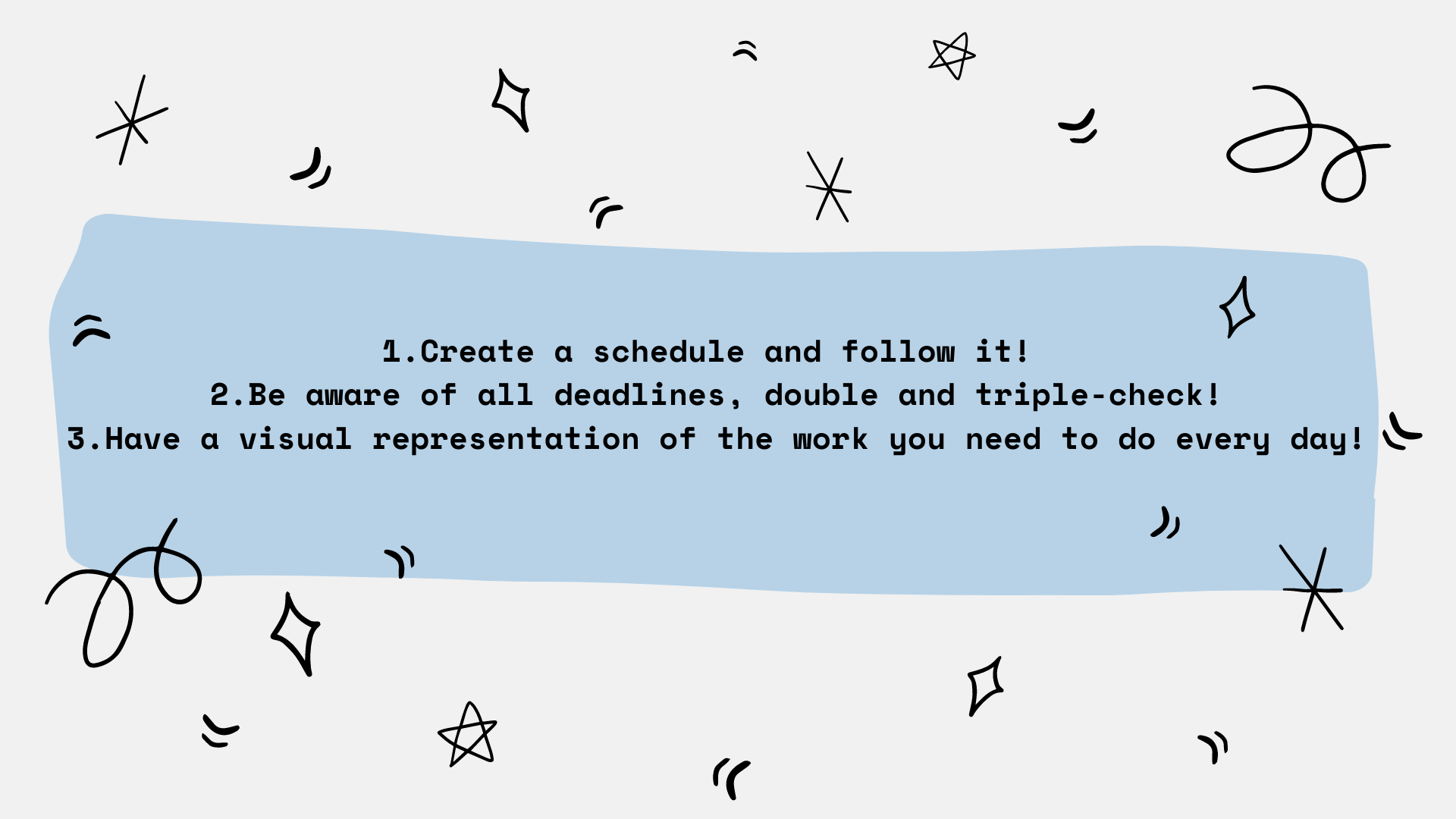
I have found that the lack of verbal cues from peers and teachers encourages me to stay keenly aware of when my projects are due. It means taking the time to create a strict schedule and following it as best as you can. Being diligent and focused also reduces the chances of you falling behind.
Communicate With Teachers ON TIME
Regardless of whether you are the type of person who can learn on their own or someone who needs regular feedback from professors, the one thing that students of all ages agree on is the importance of communication with their teachers. The issue with communicating in an online environment is the delay between when you ask a question and when the teacher has time to respond. Without that immediate one-on-one interaction with teachers, you are at risk of missing key concepts. Communicating on time is important so you do not find yourself in a panic the night before the test when your teacher isn't responding to your emails (They are probably walking their dog while you freak out). Here are some tips on how get the best out of your correspondence:
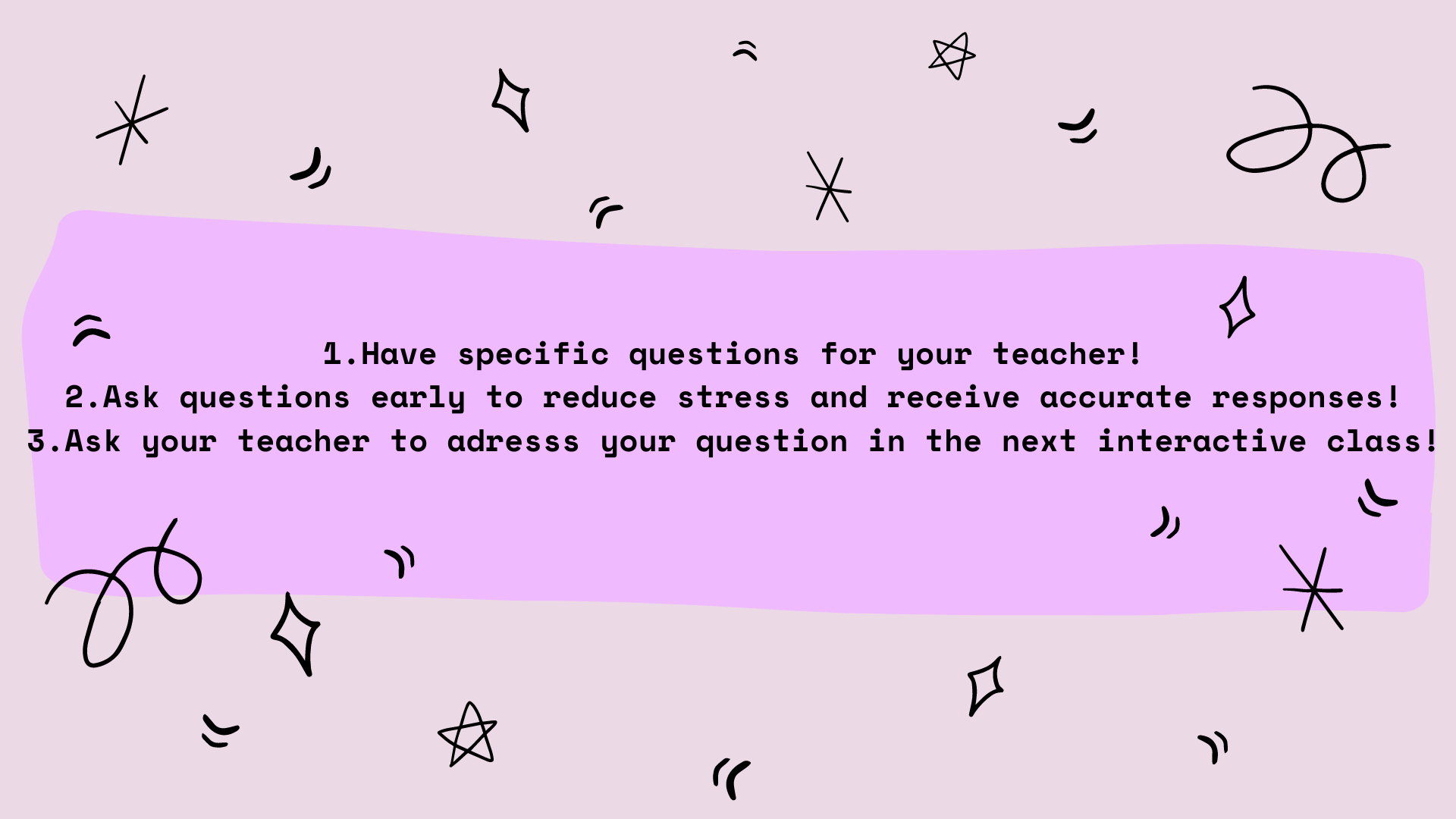
Communicating in a timely manner helps get your point across slowly and in a relaxed environment. If it is something you think the answer is something you cannot understand through an email, ask your teacher if they can explain it in their next interactive lecture or tutorial! That way you at least get an interaction similar to when you are in school and other people may benefit from your
Conclusion
This new way of learning reminds us of the crucial role schools play in the development of our personalities through all various relationships that . It gives us the opportunity to reflect on what school is and all the things we learn from interacting with our peers. It is a shame how little effort we put into funding the places we expect to grow from. Through this pandemic, I hope that it enhances our learning processes and gives us better insight into what is really important in our education system.
References:
Kara, M., Can, G., Henderson, S., McGreal, R., Kennepohl, D., & Blomgren, C. (2019). Master’s Students’ Perceptions and Expectations of Good Tutors and Advisors in Distance Education. International Review of Research in Open and Distributed Learning, 20(2), International Review of Research in Open and Distributed Learning, 2019, Vol.20(2).
Louwrens, N., & Hartnett, M. (2015). Student and Teacher Perceptions of Online Student Engagement in an Online Middle School. Journal of Open, Flexible and Distance Learning, 19(1), 27-44.
Toppin, Ian N, & Toppin, Sheila M. (2016). Virtual Schools: The Changing Landscape of K-12 Education in the U.S. Education and Information Technologies, 21(6), 1571-1581.

Why Every Young Girl Should Watch the Movie Ugly Dolls
The constant pressure to be the ideal looking girl is one that is inbuilt into our society and the expectation is that most young women will try their best to fit a certain mould. The movie Ugly Dolls gives a sense of how daunting the task of perfection can be and it emphasizes that it is okay to be yourself!
Perfection. The central theme around this animated movie comes down to the idea of being flawless at all times. The need to look perfect is a growing and persuasive culture we have accepted in the 21st century. We live in a world that demands near perfection from young women.
The methods are subtle and the causes convoluted, however, there can be no denying that girls and women alike face nearly constant pressure to look a certain way. As an animation lover, I was in awe of how the movie Ugly Dolls managed to depict the need to be perfect and the complex emotions that come with the unattainable.
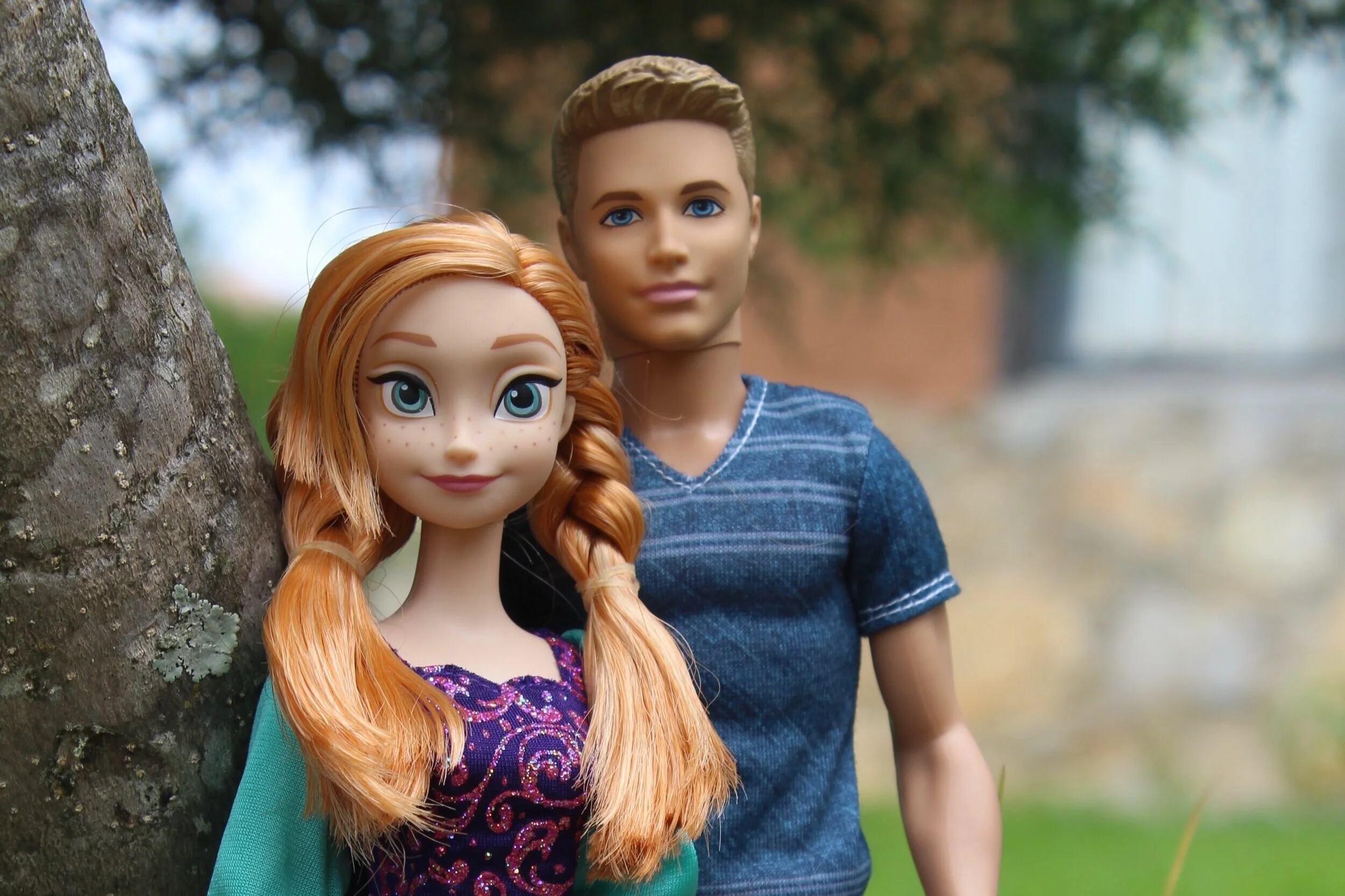
I will try not to give out too many spoilers as I discuss my favourite parts. The movie centers around a doll named Moxie and her friends. Her only dream is to belong to a child but that’s not possible because she is considered a defective product, and to her that means ugly. She celebrates her “ugliness” until she finds herself in the land of perfection where dolls go to find their forever homes. In the land of Perfection, Moxie learns that being ugly is terrible fate and that she will never look like everyone else.
Moxie goes as far as getting a wig, sucking in her tummy and even waxing just to be as perfect as every other doll. Throughout her journey, there are beautiful dolls all around her convinced that she will never be good enough. The need to fit a certain mould or look is something I think every woman has felt in this day and age. The billion-dollar industry that is makeup is proof of that. Ads often depict a woman who more often than not has been airbrushed to perfection and we are left in a cycle of trying to achieve the impossible.

Throughout the movie, Moxie's tenacity and sheer will are all directed towards finding a child to call her own. The movie not only addresses being who you are, but it shows the outcome when you refuse to give up on the things that are important to you. Whether it be failing an exam or not getting the job you want, we all need the courage to shine and the movie Ugly Dolls emphasized the ups and downs of relentlessly pursuing your dreams.
I would recommend this movie to girls of all ages who don’t mind animation and can tolerate the occasional corny song. Ugly Dolls gave a clear picture of the pressure that women can often feel to be something they’re not. The pressures are even more nuanced for women pursuing careers in male-dominated fields as there is the undeniable need to fit in and be a part of the “boys club”. Although there is nothing wrong with the “boys club”, there is unexpected freedom that comes with being comfortable with who you are and bringing your unique ideas to the table.
Although the causes aren’t direct, one can see how the need to be perfect can affect a young child. I believe sitting down and watching this with your kids will at the very least, show them what it can be like to fail and persevere despite the odds they may face.
Let me know what you thought of the movie in the comments below!
How Lego's Are Inspiring The Young Scientist
Picture this.
You wake up in the middle of the night thirsty and in a barely awake state you grab a glass of water and the unimaginable happens. You. Stepped. On. A Lego…
For a moment the world blurs into pain and you find yourself thinking of throwing away your kid’s full box of legos. Then you remember the energy and exuberance your child has simply by playing with the tiny plastic blocks. The kind of energy that reminds you of your own sense of playfulness. It reminds you how important being a kid can be.
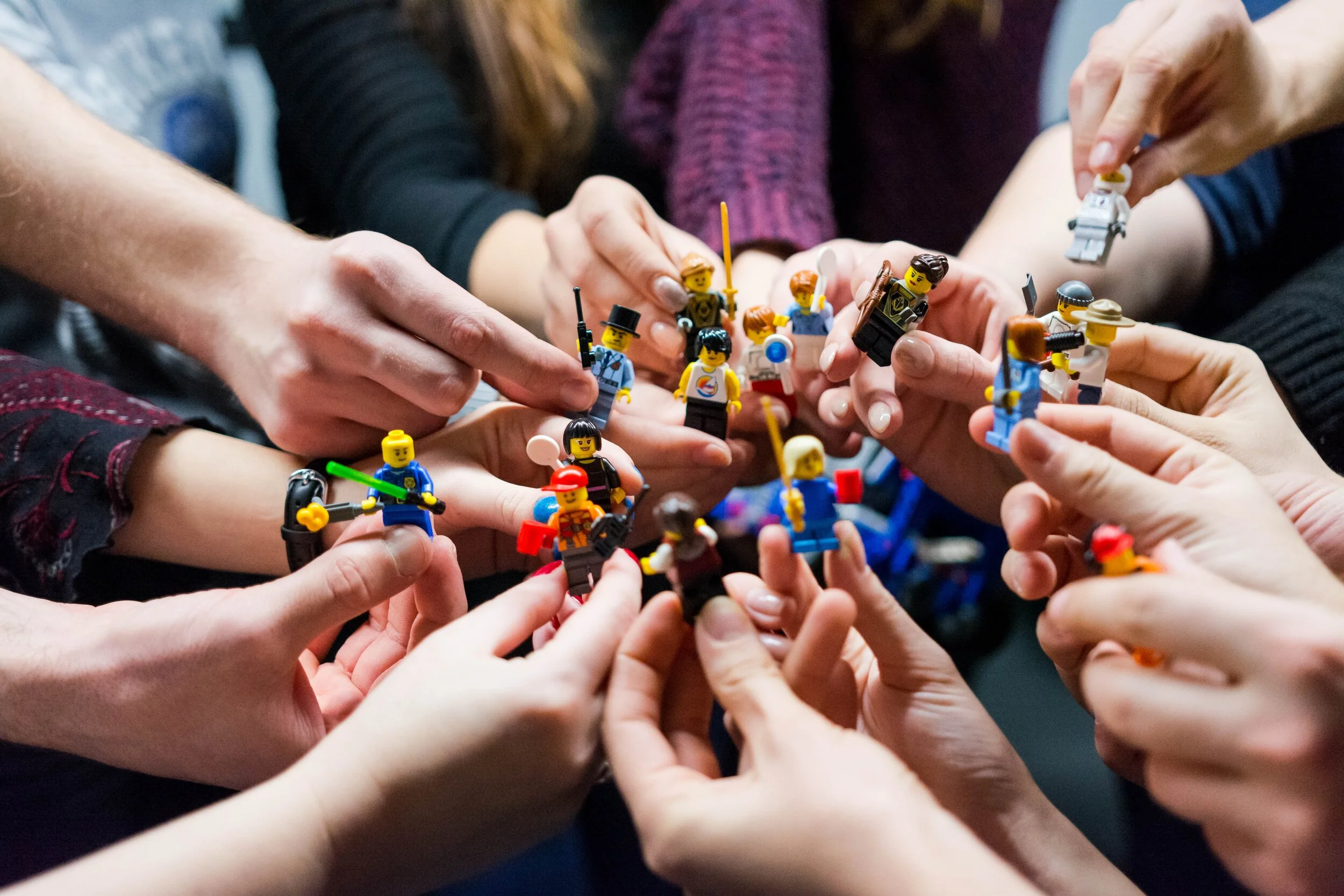
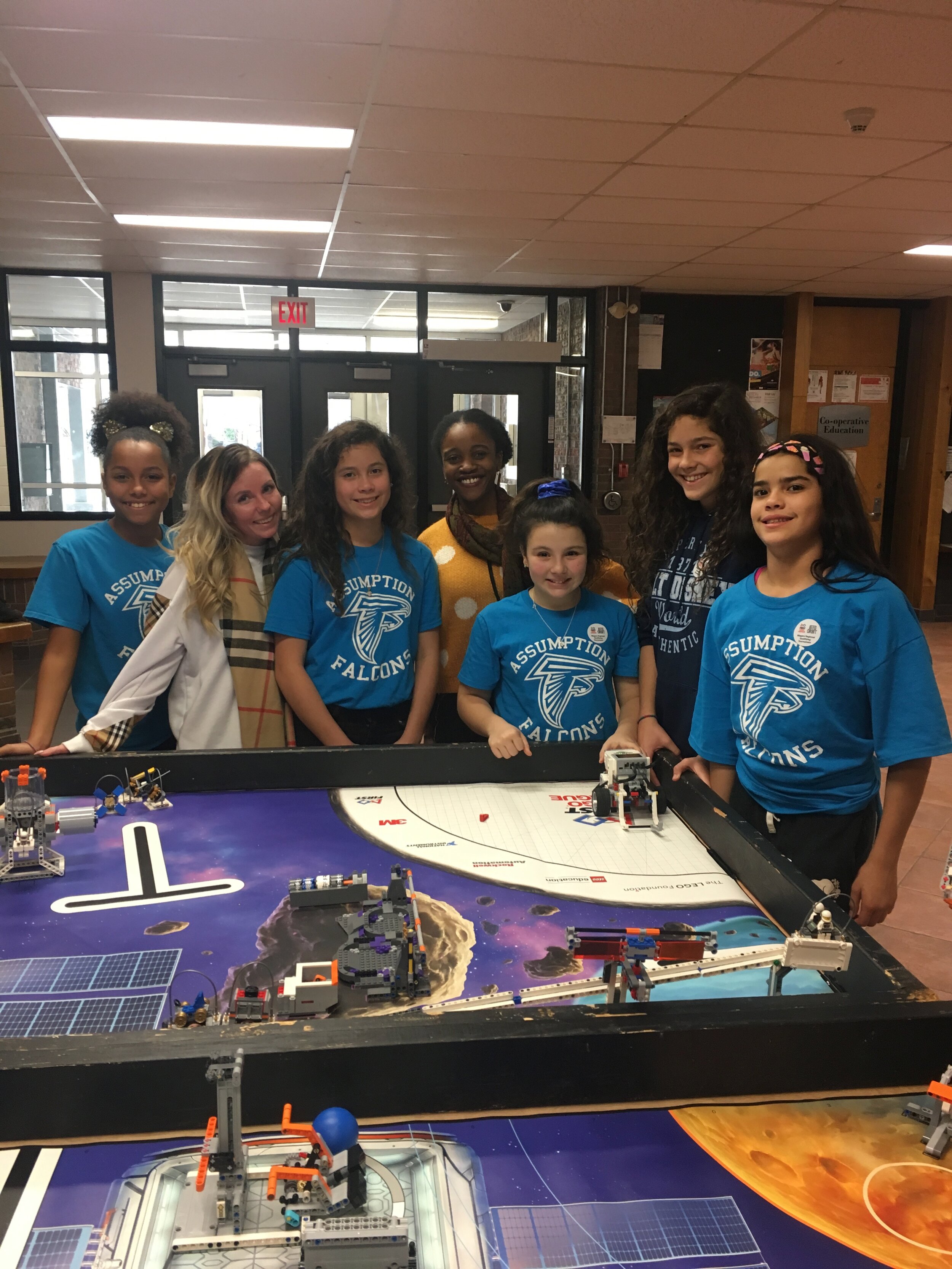
In 2019 Lego is doing more than creating fun little blocks for your little one. In 2019 Lego has taken the idea of creativity and the company has aptly managed to weave it with science. They have created the FIRST Robotics Competition which I think is something that every child should have the opportunity to try out! FIRST Robotics is a non-profit organization for kids in grades K-12, and they encourage STEM (Science, Technology, Engineering, Mathematics) learning for children of all ages.
The kids get to build a series of themed Lego blocks that centre around a real-world problem. While they still get to have fun using the colourful blocks, they also have to build a robot and program it for the competition! The program does not only encourage science learning but also facilitates an environment where teamwork is emphasized through a design project. In a world where science and technology are becoming more important daily, the FIRST Robotics program has found a way to teach life skills that may eventually lead to more job prospects and a deeper knowledge of how our world works.
My first experience with the Lego inspired program was in 2015 as a second-year engineering student in Dalhousie University where I had the opportunity to be a mentor to a team out of Truro, NS. That year the theme was animal allies and it highlighted the many ways that humans interact with animals. I worked with a team of 5 kids and together we got to build fun Lego animals that would later be used to interact with our robot. From there I got the opportunity to be a co-ordinator and finally a judge at the competitions. The sheer brilliance and ingenuity of what the kids can do is astounding!
The FIRST Robotics program has been able to achieve some phenomenal things. For example, 98% of the kids in the program reported greater awareness of the sciences and a whopping 87% of them has increased interest in doing better in school. The impact for young girls is even more fascinating. A survey taken by FIRST Robotics showed that females that participated in the program , showed 96% more interest in STEM-related careers as opposed to those who had not. In addition, FIRST alumni students were twice more likely to have interests in computer science, 3 times more likely to be interested in engineering and 4 times more likely to be interested in robotics in college.
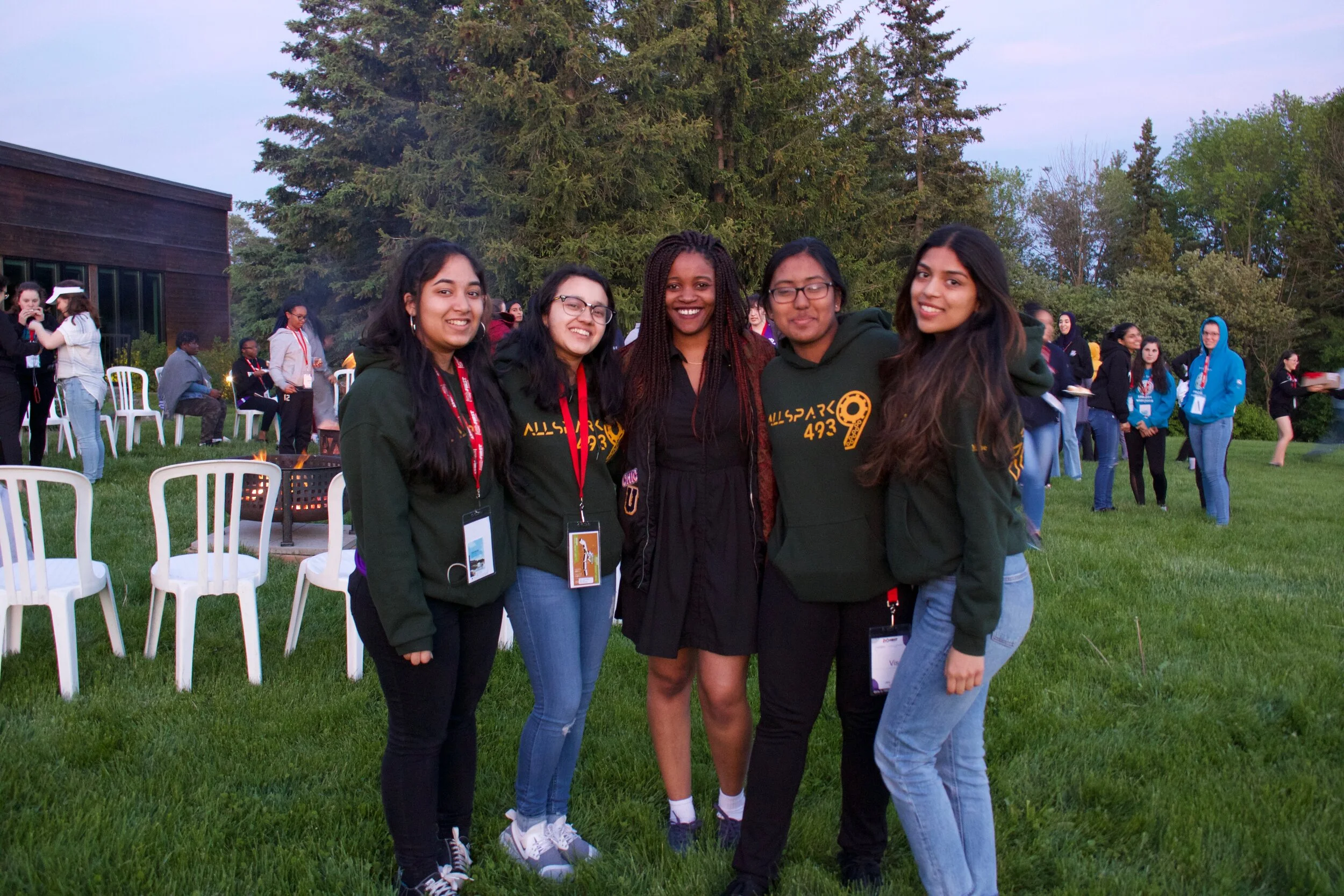
Last summer I was given the phenomenal opportunity to attend the FIRST Robotics Weekend For Girls and it was a reflection of what can happen when we put a concentrated effort into building courageous youth who are confident in their knowledge. The weekend getaway was held at a beautiful conference centre in King City, Ontario. Upon arrival, the girls were treated to a wonderful lunch and a list of the days activities which included a fun scavenger hunt! The weekend was fun-filled and packed with STEM-related challenges, bonfires and the chance to chat with mentors like the President of John Deer Canada. Companies like General Motors were involved in design-related games that challenged the girls to think outside the box and be creative with their solutions. The event gave young girls a safe space to interact with each other and share their love of science while talking about all the problems they faced along the way. From my own experiences in school, I know there is a confidence that comes from being free to make mistakes and explore different ideas without judgment.
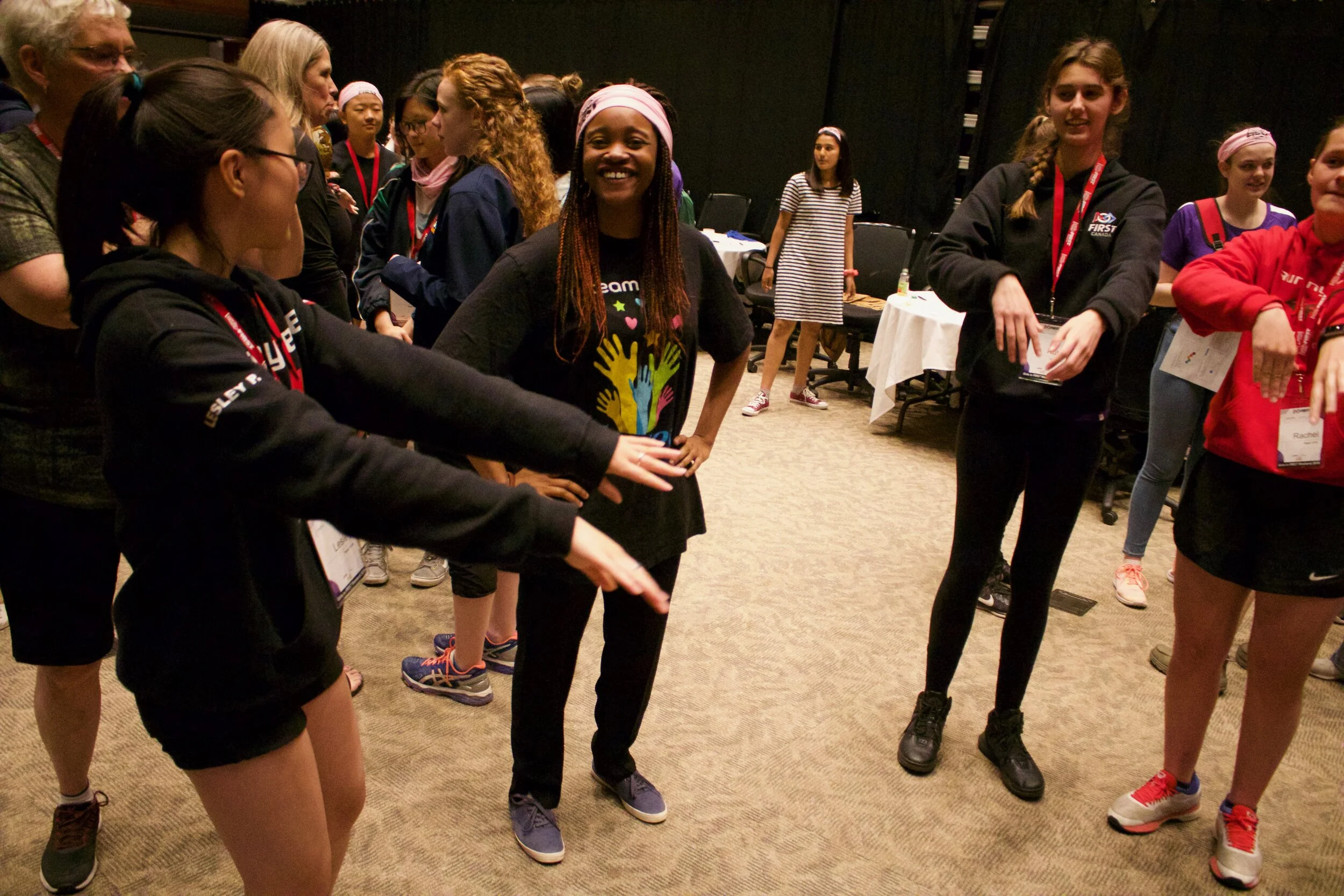
I wrote this piece as a way to encourage parents and mentors to take the extra time and find out what ways they can facilitate their kid’s learning for a successful future in a world fuelled by science. FIRST Robotics is just one of the ways this can happen and it really gives you a sense of what young people can do when given the time and space to be creative. It doesn’t have to be Legos, it can be books, posters or even games! It all ends up being about the confidence it takes to fail and persevere despite challenges.
If you liked this article, subscribe and look out for my next blog about how literacy can facilitate science learning!
Top 3 Valentine's Day STEM Activities
It’s Valentine’s Day weekend, and Love is definitely in the air! But that doesn’t mean science can’t be as well!
It’s Valentine’s Day weekend, and Love is definitely in the air! But that doesn’t mean science can’t be as well! If you’re looking for something fun to do this weekend, check out the Top 3 Valentines Activities that involve science! They’re easy, cheap and a whole lot of fun!
You will need a few things for this experiment and you can get most of them at the local Dollar Store. Here is a list of everything I used for these Valentine’s Day Projects:
Materials:
Plastic Hearts
A Vase/Bottle
Red Food Colouring
1 L of Oil
1 Cup of Water
Alka-Seltzer
Paper
White Crayons
Red Paint /Purple
Cooking Chocolate
Plastic Hearts Mold
Let The Fun Begin!
Love Lava Lamp
Lava lamps are those fun lamps that you sometimes see in specialty stores or sitting on the living room of your eccentric auntie. And guess what?! You can make your own lava lamp at home and the process is much cooler when you do it yourself.
The idea behind home made lava lamps are a great way of observing how science contributes to our day to day lives. In this activity, you see both a chemical reaction and the consequences of polarity in molecules. Making the lava lamp is easy and a delight to watch!
To make the lava lamp you will need:
Food Dye,
Alka Zelter,
500mL- 1L oil,
1 cup of water.
Vase/2L bottle
Plastic Hearts
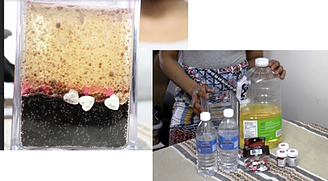
Steps:
Pour the cup of water into your vase. I used a vase because it was what I had available but you can easily use a 2L bottle
Next, pour all the oil in slowly to avoid the two liquids from mixing. You may need to wait a few minutes for the liquids to be completely separated.
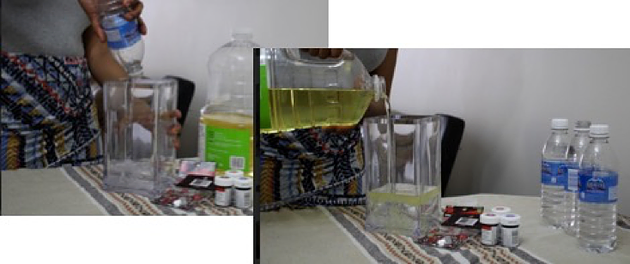
3. Once separated you can add the food dye. You can use as many colours as you like! You can add any plastic hearts or sequins at the same time. (I used foam and plastic in mine)
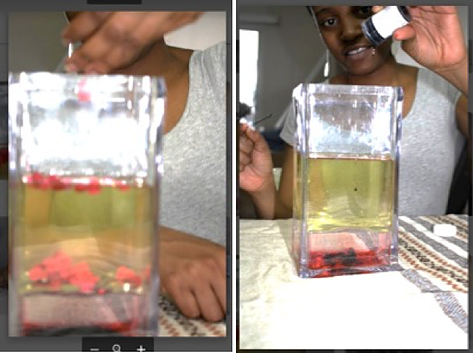
4. Drop an Alka Seltzer tablet in the vase and watch your Lava Lamp come to life! I had to make a video because it was so much fun!
Why don't the water and the oil mix?
During the activity, the oil floats on the water like a fish in the sea! Why is that? It all has to do with electric charges! Water molecules carry a positive charge at one end and a negative at the other. The charges are attracted to each other and join to make hydrogen bonds. However, oil molecules carry no charge. These fundamental differences are enough to make the two liquids enemies of sorts. The oil molecules will stick together and so will the water molecules so they will not mix.
Questions: How do you wash away an oil spill if it won’t mix with water? Why is the oil on top and not the water?
Bubbly reaction?
My favourite part of this activity are the bubbles! The reaction is fun to watch as the water fizzles and the colours can be brilliant! So what’s happening here really? It all has to do with the ingredients of the Alka-Seltzer tablet: citric acid and sodium bicarbonate(baking soda). When the tablet hits the water, the two compounds react and create the fizzy show that you see! You can create the same effect with baking soda and vinegar
Questions:Why do some substances react and others don’t?
Invisible Messages
The next activity ties in perfectly as it draws on some of the concepts we talked about for the Lava Lamp. This one was one of my favourite art projects in school and you can have a lot of fun with it! To create an invisible message you will need:
White Crayola Crayons
1 Cup Water
Red paint
Paper
Wooden Stencils (optional)
Paint Brush
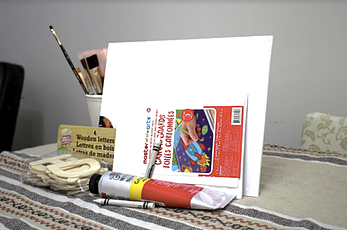
Steps:
1. Write your secret valentines message on the paper with white crayons.
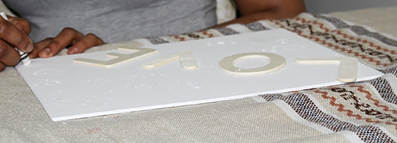
2. Pour 1 cup of water into a bowl and mix with a dollop of paint. Stir until watery.
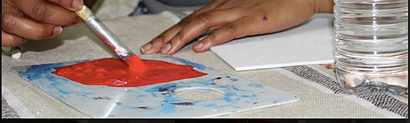
3. Brush lightly over the message and watch as the message appears underneath the paint

Why does the message show up on top of the paint? **Hint:What doesn’t mix well with water?**
If you guessed that the crayons are made with oil, then you would be right! Crayons are often made with parafin wax which comes from petroleum oil. From the first activity, we know that water and oil molecules don't mix well!
Change of Hearts
Last but not the least, we can explore changes of states by making chocolate hearts! Yumm! Here is a list of what you will need for this delicious activity:
Chocolates
A bowl/ Paint Pallet
Plastic hearts mold
Food dye
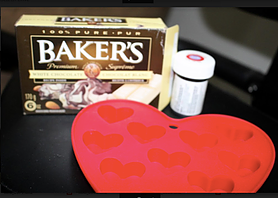
Steps:
Bring out the chocolate from the box. **Note that it is in it’s solid state at that point*
Melt the chocolate at very low heat or place in the microwave in 1 minute intervals until it is in liquid form.
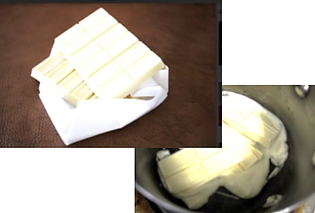
3. Once the chocolate is melted, pour into the plastic mold.
4. Decorate any chocolates as you like.
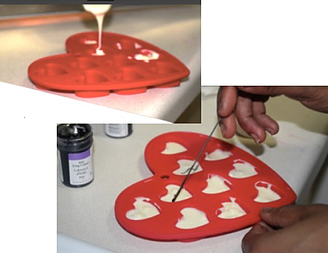
5. Place in the freezer for an hour
6. Once the chocolates have set, go ahead and eat the delicious treats!

What changed in the chocolate?
The chocolate started off as big rectangle sugary blocks and we were able to change the shape and create Valentine’s Hearts! It’s all related to states of matter. Matter is anything that occupies space and has mass. There are three states of matter in the physical world and they are solids, liquids and gases.
The molecules in a solid are closely packed together, however they are constantly vibrating even though we may not see it. Solids hold their own shape like the chocolate before it melted.
When the chocolate was heated, the molecules began moving faster because of the increase in temperature. This caused the chocolate to become a liquid. The molecules in a liquid can move and slide past one another, making them free flowing. Liquids can also take the shape of whatever container they are in which is the reason we poured them into heart shaped molds! Once the chocolate was placed in the freezer, it returned to its solid state.
There were no visible gases in this experiment, however a gas has plenty of free space in between it's molecules. Gases flow very easily while assuming the volume and shape of their container.
Hope you had a lovely Valentine's Day and ate lots of chocolates!!
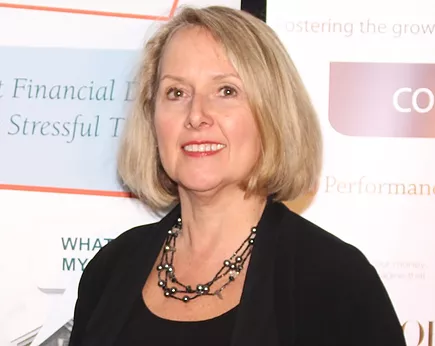
Role Models For Girls: Carolyne Watts, Plant Manager Extraordinaire!
Meet Carolyne Watts, Plant Manager at the GM St. Catharines Propulsion plant. Carolyne is responsible for overseeing the production of engines and transmissions of entire car fleets.
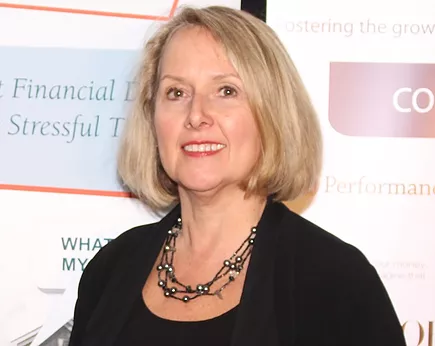
Meet Carolyne Watts, Plant Manager at the GM St. Catharines Propulsion plant. Carolyne is responsible for overseeing the production of engines and transmissions of entire car fleets. She is an inspiration as one of the few women who has been able to dominate in a predominantly male industry. Find out more about Carolyne in this short and sweet interview!
How did you decide to pursue a career in manufacturing?
It was a decision that was made for me based on my circumstances. I had finished my pre-university in Quebec, where you have to complete a mandatory 2 years of college before university. I had taken business and I needed money to advance to university. I searched for business programs around the country and GM had a university in Flint Michigan called General Motors institute and they were providing a co-op program that appealed to me.
They were one of the few companies that provided a business co-op experience and I ended up being sponsored at a plant outside of Montreal. I quickly found I loved manufacturing, and I liked the experience of managing your own business. I started off as a group leader and I was responsible for 50 people. I had to manage a budgets, quality control, labour relations and I enjoyed how I got to apply everything I had learned..
What achievement are you most proud of?
When I started out, there were not many female plant managers in manufacturing and that was very significant for me. Another external award was being part of the top 100 women in automotive and that was great recognition from an external body.
But I believe that whatever achievement I had right in front of myself was my best one. I had so many goals, and being able to achieve them was imperative to me. I knew what I enjoyed and I was very competitive. I put myself in positions that were more difficult because that was my personality and it helped me have clarity on what I wanted in life.
"The one thing that is really important especially in the non traditional areas for women is to be yourself."
What mistakes do you see young women make?
Well I see a lot of young women, enter a profession and alter who they are to fit in. The one thing that is really important especially in the non traditional areas for women is to be yourself. You look at the men and you say this is what an ideal plant manager acts like in terms of behaviour but you need to be yourself. Because if you try to be what you think you should be, then your strengths don't have an opportunity to be as visible as opposed to when you're being yourself.
Piece of advice you would give young women?
I would advise young women to be confident, speak up and create mentorships. Make sure to create mentorships other than the traditional ones where they coach and provide you with knowledge. I is important to pick someone who can put some input on your competencies and skill set but it’s also important to have someone who can is in the right position to create opportunities for you. Pick someone that will open the doors for you in whatever you are interested in. A good mentor may be able to recommend you to others for positions they think would enhance your career.
Make sure to be bold about knocking on doors! For everyone that says no, someone will say yes. And always be prepared. Go in with a business plan, with a concept and make sure it is professional. As you progress, remember to experience what is happening at every moment and learn from it.


What is STEM Learning in 2019?
Sometimes referred to as STEAM, it is the study of Science, Technology, Engineering, (Art), & Mathematics.
WHAT IS STEM?! What is STEM in 2019 and why does it matter?
Well I'll tell you what, it's not the Silent Team of Eating Monsters that’s for sure!
Yes, I have jokes.
What does STEM stand for really?
Sometimes referred to as STEAM, it is the study of Science, Technology, Engineering, (Art), & Mathematics. The STEM fields are often responsible for the innovation and technology that are vital to a countries economic prosperity. In Canada alone, the CANCode program spent $50 million in two years in order to encourage youth K-12 in coding programs. Computer science is just one of the many programs that STEM encompasses and although the definitions of these subjects have changed over time, they remain significant to us as a society.
Most of us have basic understandings of these subjects but what do they really do? And how do these fields affect us as a people?
Science:
The sciences are a systematic way of understanding the physical world through observation. Scientists will watch phenomenon and then test their ideas until they have some conclusion or another. It is the idea of watching something happen and looking for patterns. An environmental scientist might watch the weather and look for patterns that may be unusual. Finding such trends may gives us the opportunity to better predict climate.
For example, I was fortunate enough to work as a research assistant at Dalhousie University in Truro, NS. My job was collecting data on algae blooms that were growing in water reservoirs. Due to the increase in temperature year round, algae blooms are now surviving into the winter months which poses a threat to our fresh water. The scientific aspect of this job was testing the water for chemicals, clarity, oxygen levels and many other causes of the mossy plant. The collection of this information will allow the research team to make predictions for the future and perhaps prevent the loss of our fresh water.
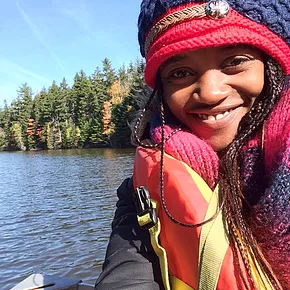

At the reservoir looking for algae blooms!
Technology:
Technologists focus on design thinking while creating a more comfortable human experience by addressing needs and meeting them through innovation. Technologists work closely with or are often scientists themselves because their work involves identification of an issue through observation.
Creativity is an integral part of the design process as it often involves coming up with out of the box solutions to problems that have never been tackled before. The use of computers make it much easier for technologists to test and validate new ideas and concepts. When I worked as a research assistant, we used a GPS technology to navigate through the reservoir. The GPS had the saved locations of different spots on the reservoir. and using the device allowed us to test the same area every time we went to the water. This safeguarded the data we collected and made sure our numbers did not change because of things like water depth.

Engineering:
Engineering is the application of science and technology used to solve real world problems. Engineers come together to design and build machines and structures that can be later used by specialists or society in general.
Engineers use problem solving concepts to tackle complex issues that require them to design, test and validate solutions. A great example of engineering is the centrifuge! While working on the algae research, it was necessary to separate the algae from the water and we had to use a machine called a centrifuge.
A centrifuge works a bit like your clothes dryer at home. When the clothes are spinning, they experience centripetal force which tends to pull things inward. While the clothes are spinning the water in them does not experience the force and follows a straight path towards the drum holes. And that's how clothes dry! I'm sure this cat would calm down if it knew about centripetal forces!
Using a similar concept, a centrifuge is engineered so that it can separate mixtures of different densities like algae in water!
Fun FACT: The first centrifuge was used to separate cream from milk!
Mathematics:
Math is the glue that holds Science, Tech, and Engineering together. Maths is used as a way to accurately identify patterns in large amounts of data. Problems are also made easier with mathematics as it allows you to make predictions using past information.

Using mathematics, an engineer can design a bridge strong enough to withstand high winds by calculating how much force the bridge will take. By anticipating these factors with maths, engineers and scientists are able to create safe and useful designs. During my work, all the information I collected was in the form of a numerical value.
So when we take a closer look at the STEM fields, we can see it's really just creative design using mathematics! When I first began my engineering degree, I had an image in my mind of what I would be doing but boy was I wrong! STEM gives individuals the ability to learn how to learn! I do not think every one needs to be a scientist or an engineer, however it is a great skill to be able to always think outside the box and test your ideas!

Role Models For Girls :Meet Love Bello, Computer Science Extraordinaire!
Love Bello is a Project Manager at CGI who uses her Computer Science degree to plan larger scale projects where she manages everything from the budget to risk assessment.
"Your level of creativity determines how much you can get from computer science."
-Love Bello
Love Bello is a Project Manager at CGI who uses her Computer Science degree to plan larger scale projects where she manages everything from the budget to risk assessment. Learn a little more about what a Computer Scientist may do in the future!

1. How do you work with computers? What kind of exciting things do you do?
I use computers to create project plans that include schedules, activities, how long the activities take, and resources assigned to do the tasks. I also use computers to manage the budgets for these large projects. These things would be far more tedious to execute if it wasn't for computers. Computers are very valuable when I am in the process of re-engineering a process. It gives me the ability to test certain ideas before implementing them in real life. Not only do I use computers for work related tasks but also as a versatile storage place, especially in my music work.
2. What field would you say has had the most development with computers?
In today's world, computers have become a natural part of everyday life. They continue to prove important and their use will continue to be progressively versatile. Though every field has embraced computers, it has become a game changer in medicine. For example, with a patient's permission a doctor can trace entire medical history through a shared database as opposed to waiting on paperwork from another hospital. It has also made a huge difference in e-commerce which has created a whole new set of diverse job opportunities for people. Financial analysts can now rely on sophisticated programs to predict investment trends or estimate yearly profit targets.
3. How did you become interested in computers?
Circumstances got me interested to be honest. I had wanted to study medicine but I couldn’t get into medical school. After applying a couple of times, I was offered Computer Science and in a bid not to waste my time I opted for computer science and here I am today almost ten years later!
"Value people in your day to day dealings and you will be amazed at how much you will be irreplaceable by computers."
4. What would you say to encourage younger kids who might be interested in computers?
Keep at it and don’t narrow your scope. Don’t restrict it to playing games but maximize its purpose and don't forget to think outside the box and be creative. Your level of creativity determines how much you can get from computer science. Widen your horizon!
5. There are a lot of questions regarding computers and how they affect us as a society, especially concerning the future of jobs and them being automated. Can you highlight on some of the negative or positive aspects of that?
Yes, that can be a valid concern but computers cannot take the place of human relationships. If you find yourself in a field like computer science you need to demonstrate more than just technical “know how”. Although computers can be trained to do anything, it is essential to have the technical knowledge with a blend of the human relationship aspect. Value people in your day to day dealings and you will be amazed at how much you will become irreplaceable by computers. Medicine has really embraced this concept, as you can have a surgeon in New York working on a patient in Saskatoon; this has made life easier in cases where you have few specialists in a particular field for example. A patient really doesn't have to travel to New York to have the specialist surgeon work on him or her but can be done ‘remotely’, saving both the patient's life and the cost of transferring the patient.
6. How could a young girl prepare for a future that will be heavily dominated by technology?
First, dream and keep the dream alive. Don’t feel intimidated and believe there is a vacuum out there for you to fill. Maximize every opportunity to learn so you can be on top of your game and so you can be prepared whenever a challenge comes knocking. It has more to do with drive than the technology. Don’t feel intimidated, it’s doable and you really can make a difference! Have confidence in yourself but be teachable.
7. What was the most challenging course during university and how did you get through it?
Discrete Mathematics. I guess what I did was to study with my colleagues and solve lots of past questions. Practice makes perfect! You can do it!
Wow, who knew computer science could be used for so many things? Or that it involved so much creativity? As this impressive field becomes more adaptable, I hope more young people will see the benefits of the various careers in Computer Science.

Math, Confidence, and Your Little Girls Future
Brace yourselves, it’s about to be all about math! Not really, but I wrote a short and silly poem about the subject just to start us on a high note.

Brace yourselves, it’s about to be all about math!! Not really, but I wrote a short and silly poem about the subject just to start us on a high note.
“Math is as math does,

And so forth,

Can’t let mathematics

Decide your worth!”


-TheSTEMGirl
Mathematics is the foundation of many concepts that flow through technology and it drives a large portion of our socio-economic society. Much of the hurdle regarding encouraging girls in STEM is the study of maths. It is important to note that there is minimal support for the view that men are better at math with the multitude of research interpreting the gender differences in math ability as non-existent.

In elementary school scores are equivalent but in both Grade 4 & 8 girls score lower in math tests. Although the differences are minute, they increase as the girls go to college and university. Even if we were to put the lack of women in STEM on math ability, men with lower math scores are still more likely to enrol into a STEM program. For example, more than 30% of men with marks under 80% enrolled in STEM programs as opposed to 10% of women. These programs can make direct contributions on a countries competitiveness. For example, through research and development STEM graduates are often key partners in the innovation systems.
So, this is not about separating math ability by gender, but about seeing how we can get more girls to be a part of the growing and creative technological transformation. It’s about finding all the detailed ways we can help our girls be more confident in their ability to learn and enhance their skills for the future.
The underlying results in most research is that confidence is key. Girls are facing a subtle but very real societal expectation to fail. Historically, women had to fight for their education and we still feel the effects of old schools of thought today as young girls continue to navigate their identities in educational settings. Although 59% of all university graduates are women, the vast majority are enrolled in the health and social sciences fields and often drop out of 1st year STEM due either fear or lack of confidence in skill.
Young girls consistently attribute failure to an inherent lack of ability which is just not accurate. Unfortunately math is a tricky and unique subject that builds upon itself and one can see where the issue would occur if every time you failed you thought it was because you sucked. This would be of no consequence if not for the fact that their is a steady rise in both analytical and technological jobs.
To get your little girl comfortable in these subjects, it is important to look at the environment where she learns. Many researchers suggest interventions such as math camp to understand the perspective of the girls themselves. The effect of math camp was studied among 16 middle school girls and the greatest impact was from the change of environment. Learning is a process of transformation not only with content but also with how your girl learns to interact with her community. The math camp gave girls of varying learning abilities and socio-economic status the opportunity to interact and discuss their mutual struggles.
 "I felt like I was the only person

who didn't understand math in a way,

and then I met all these other girls

who were having trouble..."
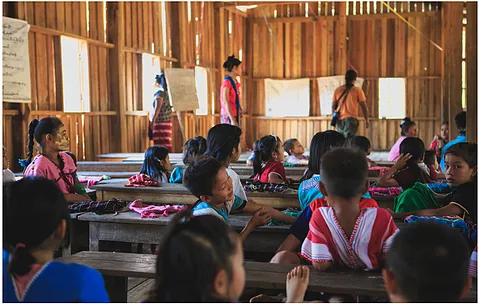
During the program the girls studied problem solving, spatial tasks, geometry, data analysis and algebra.The activities included hands on games and real world investigation like getting the girls to draw triangles and debate about the sums of the angles. The girls were also given the opportunity to interact with female role models in STEM and learn about famous women in history that excelled in mathematics or computer science.
The research was based on questionnaires the girls took that were designed to evaluate the their confidence in mathematics before and after the camp. Another important factor was how the girls addressed difficult problems when they came across them. The results were categorized based on similar responses by each girl. The common attributes that all girls discussed regardless of race or economic background were the way the information was taught, the curriculum and their peers. The concept of shared struggles was a big part of the discussion as this gave many of them the confidence to keep trying.The quote below gives a good depiction of what is happening mentally when young girls face these unique problems.
“I think that Math Camp built up my confidence because at some point in time I felt like I was the only person who didn't understand math in a way, and then I met all these other girls who were having trouble or not having trouble in the same areas that I was and it was just really nice to know that there were other people other people out there who were just like me. “
The doubt many girls experience is mathematics is brought on by nature of the environment and how comfortable they feel expressing their challenges. Teachers are often overworked and it is important they give all kids equal levels of attention and not distance anyone from the learning process. Teachers may not have the time to give your little girl the affirmations she needs so try to do it at home! A sense of sharing difficulties and struggles is what seemed to be the most effective so saying certain things could help. If you notice her struggling, especially in technical things try deliberately saying words like:
“It happens to the best of us.”
“Try, try, try again.”
“You can’t fail, just keep going.”
“That’s a tricky one, but you can figure it out.”
“You got this!”
Resilience seems to be the answer in life and mathematics is no exception. Towards the end of the survey one of the girls captured the nature of it all in a few choice words.
“Math Camp affected me….because it has made it so that I feel that I'm not so frustrated any more about the problems I don't understand at first because I know that if I just keep looking over it, I’ll eventually understand it."
Even if she isn't working on a math problem, at least you know you are consciously tackling a challenge she herself may not recognize which is the notion of failing.It is important to note in all this, to not force your little girl into being what she doesn't want to be. A few kids know early that they want to be doctors or artists, however many change as time and experiences vary. The value of encouraging confidence in math is that it opens your little girls mind to possibilities she may never consider due to a lack of confidence.
I hope you enjoyed this Math Monday, look out for the next one! :)
Raising A Resilient Girl Is Hard, But Study Shows Love Matters!
The matter of life is a tricky one and adding academics to it muddy's the water still.
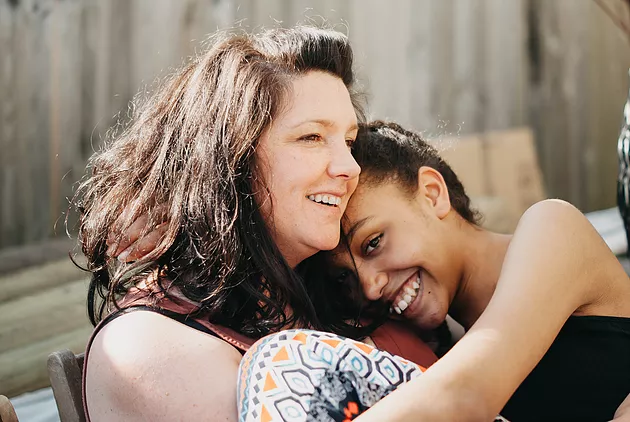
The matter of life is a tricky one and adding academics to it muddy's the water still. When it comes to education, everyone wants the best for their children and it is difficult to know exactly what it takes for any little girl or woman for that matter to succeed. It is even harder to understand what faculties of the mind a lady must acquire to persevere amid inevitable failures. Although knowledge and information are extremely helpful in the fight, it does not cover all the little battles that we must face in our minds as women or young girls.
These little battles become magnified as we get older and delving into post-secondary education compounds the stress. In the age we live in it is almost inevitable that your daughter will go to university and as the job climate shifts, the STEM fields are where good jobs tend to circulate. For young women studying in fields where they may be a minority, a constant feeling is that perhaps you do not belong and the pull to give up is strong.
An interesting phenomenon that tends to occur to young girls is those who score higher in mathematics and sciences still end up in lower paying jobs on average. There certainly seems to be a disconnect between ability we are equipped with and the opportunities we may think we are capable of handling. The confidence to push back and take risks all affect future outcomes. Resilience is key and it is a very difficult trait to teach. I found a fascinating study that looked at how affection (love in particular), can have an effect on a child’s ability to not only do well in university but to also persevere in the face of inevitable disappointments.
The study looked at three observable characteristics: young kids who have recovered after trauma, youth that belong to high risk groups, and those that have positive adaptation despite having high life stressors. They were then evaluated based on the critical condition of resilience and the outside factors affecting the outcomes. It was found that parents played a significant factor in the perceived “toughness” of youth in their first year of post-secondary school.
"Love Does Matter!"
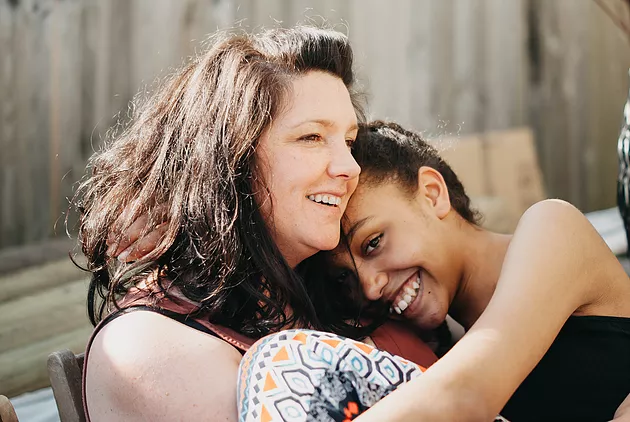
The affection of both mom and dad was important but in different ways! When youth were facing internal conflicts, like depression they called on memories of their mothers. So when you’re feeling down and think of your mom’s apple pie, its completely natural! When young kids face external conflicts like social awkwardness, they called on thoughts of their fathers.
Quality time and secure attachments with dad was of importance when it came to the success of young girls as they enter their mature lives. Dad’s tend to promote independence, playfulness, and physical fitness! When girls are closer to their father’s they are more confident in the ability to explore their surroundings. So spending time and finding something both dad and daughter like is a great way to tighten that bond and ensure she is full of grit! Even as we get older, the significance of those bonds only grow stronger!
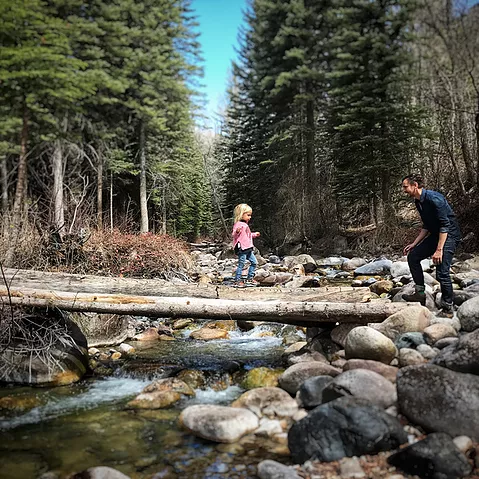
The importance of being responsive was essential for mom’s. Being responsive is hard especially if you don’t know what your kid is talking about, with social media making it increasingly harder to relate. But words of affirmation, and physical touch are the ways we tend to draw on our mother’s unending love. Whether you’re 19 or 42, a hug from your mom never goes unwanted. So keep loving momma’s!
But wait! It can’t all be love! The study also showed you can’t smother your girls. As you may have guessed, the study showed that for kids to be co-operative and successful adults, they needed a healthy balance between conceptualized attachment and the urge to break loose from their parents’ safety nets. In other words, nurture her sense of adventure so that she is free to explore and take risks.
I certainly remember wanting to leave home when high-school was over and done with and I never imagined the hurdles I would face when I began my engineering journey. But through all the failures and all the tears, my mom would just be there telling me it would all be fine. However, empathy demands that I acknowledge some people do not have good relationships with their parents or lost them at a young age. In such cases, having strong bonds with friends is very important. In essence, it is far harder to succeed in university without the support of your loved ones.
Trying to steer through academia in post-secondary school while keeping a balanced life and staying healthy can be tough! Being in the STEM fields can make it even harder because some courses seem as though they came straight from hell. Whether you’re a young lady navigating the waters of university or a loved one watching from afar, the bond that ties you together is the most priceless. I know this because the study said so.
Please share, because love is the way!
Reference:
Maximo, S. I., & Carranza, J. S. (2016). Parental Attachment and Love Language as Determinants of Resilience Among Graduating University Students. SAGE Open, 6(1), 215824401562280. doi:10.1177/2158244015622800

Take Offence Thursday: Do Women Have Souls?
Feminism is often talked about as though it is an affront to all things manly and that saddens me as that isn't what it was meant to be.
Feminism is often talked about as though it is an affront to all things manly and that saddens me as that isn't what it was meant to be. I wish there were another word for it like Flubbertin. Then I would call myself a Flubbertinist. Perhaps, that way it would not offend everyone so much.I think it’s important for both guys and gals to understand their history or we’ll repeat it. TOT (Take Offence Thursday) gives everyone an opportunity to see where the first wave of feminists found the courage to fight. It may seem like a long time ago but the balance we have now is so precarious, and the only way we can move forward is by recognizing what we originally wanted. It has to be Continuous Improvement!
The quote may sometimes be offensive but the point is to absorb it and then let it go. Which is why it is often a short post! Enjoy!

“Woman is soulless and possesses neither ego nor individuality, personality nor freedom, character nor will.”
-Otto Weininger,
And I will let that one sink in... Maybe he only meant that we were witches...I don't know. Either way it is kind of funny as all things tend to be with time. Share for laughs!
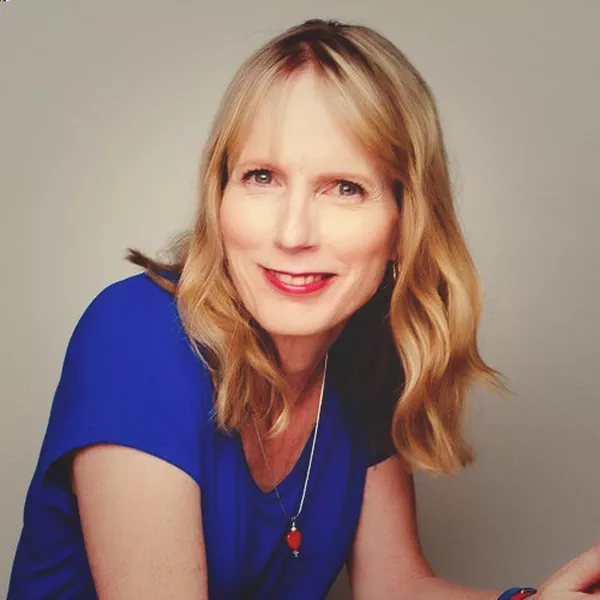
Meet Jacqueline Cartier: The Engineer with a love for Design!
Jacqueline Cartier worked for General Motors for over 30 years and in that time she became an expert in not only engineering but the field of ergonomics as well.
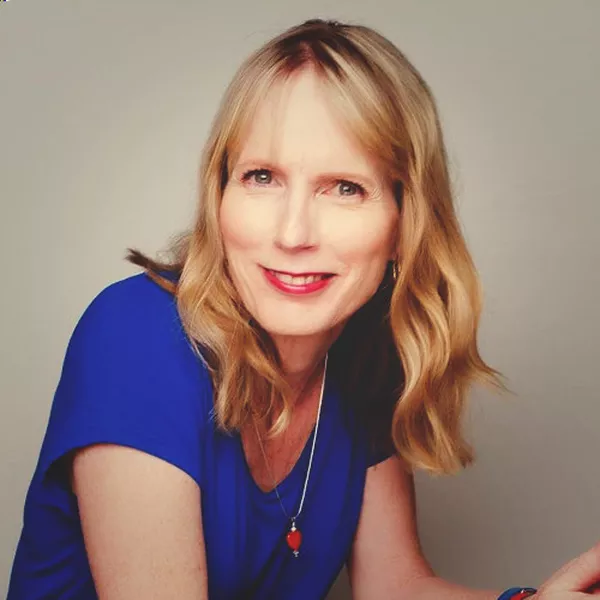
Jacqueline Cartier worked for General Motors for over 30 years and in that
time she became an expert in not only engineering but the field of ergonomics as well. Learn how important Ergonomics is to simple tasks like opening the fridge.
1. What is ergonomics and why is it important to our everyday lives?
Ergonomics is about designing machines and equipment for the everyday person. Whether you are working with cars, brushing your teeth, or even opening the fridge, there is a special design made to accommodate as many people as possible! If you are a shorter person, there may be things you can’t reach and that needs to be accounted for when designing things like cabinets or everyday appliances. All these ideas are involved in ergonomics as it is the study of the interaction between people and the things they use.
In terms of my work, I was fortunate enough to work at General Motors for many years. In terms of cars and my work, there needs to be a lot of adjustability otherwise every single person would need their own special car that fit just for them. My husband is 6 foot 3 and needs to be able to fit into the same car that my 5 foot 6 frame can fit into. You also need to be able to handle all the computers that are in cars now. If you need the GPS or google play, it all needs to be easily accessible without distracting the driver. All these things are incorporated into both engineering and ergonomics!
2.What did you want to be when you were growing up?
I think I always knew I wanted to be a problem solver. In terms of my career path, my interest in engineering started with my fourth grade science teacher. She had an after school science club and that got me really excited about experiments . And one of the gifts I wanted as a kid was a telescope so I was always interested in science.
In my last year of high school, one of my teachers asked me if I wanted to be in a paid internship through General Motors and I said yes. The experience was really important in getting me to choose my career path as I was working with process engineers and I loved it!
3.What toys did you like as a child?
Well when I was growing up we didn't have as many tech devices so I spent a lot of time playing outside with the neighbourhood kids. I played baseball and basketball in the park. I had dolls, microscopes, board games and I won a Mary Poppins talking telephone! It was my first mechanical device ever! Without phones or computers, we would invent thing like tents out of blankets and make pretend soup out of leaves and plants.
"If you always wait for people to ask you what you want, it may not come along when you want it to."
4. What would you say to encourage women starting their career path?
Make sure you plan your career and make sure you ask for advice. Don't just go with the flow, have some input into what you want to do with your life. If you always wait for people to ask you what you want, it may not come along when you want it to. So if you think you may be ready for something different, then just ask about it. Make sure to take the opportunity to talk to mentors.
And try to avoid certain modes of behaviour as it is easy to slip into patterns like the tiara effect. That is when you do your job and keep your head down while hoping that somebody may notice. Other people are making what they have done more visible even if they haven't done as much work as you and that gets them noticed more. Make sure you let people know what you are doing so you get that recognition.
5. What part of your career have you enjoyed the most?
Designing different aspects of a manufacturing plant has been great. I design work stations and put together how everything will be implemented. Design of the human interface system is really important and I like thinking through things. I get to go through all the details and analyze where there may be risks or hazards to the worker.
I like to know how things work and it’s great to be able to help people interact with machines and tools better. Engineering always involves problem solving so the different challenges are great. But working together with people is the best aspect.
6. How have you made an impact in other people’s lives?
I think I have made an impact in other’s lives by by minimizing injuries of co-workers using my ergonomics training. With simple work techniques like the ones below, I have been able to keep employees safe when interacting with different machines:
-Keep your shoulders down.
-Take micro breaks
-Slide instead of lifting
Helping people learn how to keep safe while working is really one of the biggest rewards. In the manufacturing business there is always potential for people to get hurt and my designs have prevented people from having to take long breaks from work.

Meet Hannah Blanchard: The Marine Biologist Who Plays With Giant Squid!
I think I always loved the ocean. I spent several summers sailing with my best friend’s family in coastal Maine growing up, and being on the ocean always kind of felt like home to me.

1. What is Marine Biology and how did you come to love the ocean?
Marine biology is all about studying life in the oceans. Whether it’s microscopic phytoplankton or a blue whale (the largest known animal in Earth’s history), understanding their biology, life histories, behaviour, and potential threats are essential to protecting marine life. The ocean is the biggest ecosystem on Earth, it actually contains about 99% of the total living space, even though it only covers about 70% of the surface. Almost 2000 new marine species are discovered every year; that averages out to around 5 every day!
I think I always loved the ocean. I spent several summers sailing with my best friend’s family in coastal Maine growing up, and being on the ocean always kind of felt like home to me. Pursuing marine biology was a subconscious choice when I was applying to university. It just seemed like the natural thing to do!
2.What animals are your favourite?
There are so many! Sea otters are definitely one, they are just so cute and cuddly looking, and their recovery in the Pacific Northwest is really encouraging!
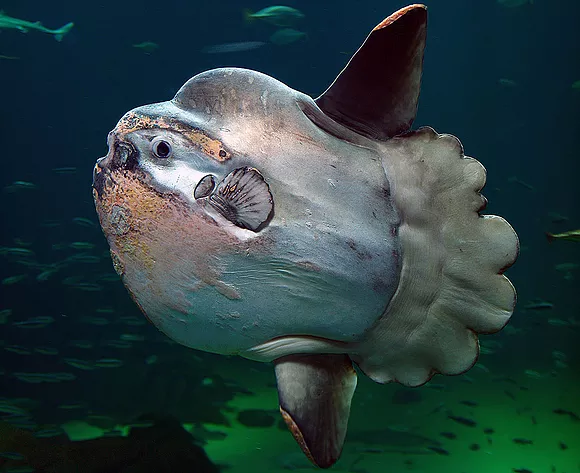
I also think cuttlefish are pretty much the coolest thing ever, they’re very intelligent and they can literally camouflage themselves into a checkerboard! Sunfish are also amazing, they’re the world’s largest bony fish and they honestly don’t even look real.
3. How do humans interact with the ocean?
No matter where you live on the globe, you’re constantly interacting with the ocean. Every other breath you take contains oxygen produced by marine phytoplankton! Humans rely on the oceans for almost everything, including seafood, oil, gas, shipping, recreation and tourism!
We even need it as a water supply now that desalination plants are essential to providing drinking water in many regions. It’s safe to say any of our behaviours that affect the environment, like producing pollution or greenhouse gases, are going to affect the ocean eventually.
4. What should we be most concerned about with our marine environment?
c Therefore, it’s really essential that we start taking drastic steps to tackle all these issues because we are running out of time to conserve the ocean as we know it.
I think 2018 is going to be a scary year for the oceans. 2017 was the hottest year on record in terms of average global water temperatures. Global CO2 levels have reached an all time high in 2018, which will lead to further climate change and ocean acidification.
Micro-plastics have also been emerging as a huge threat to marine life; they’re present everywhere in the oceans, even the bottom of the Marianas Trench! Overfishing and marine pollution are also major issues in most areas.
On a brighter note, ocean awareness has never been more prevalent, especially on social media. So I think we will start seeing some changes in how people live their lives, and hopefully that leads to changes in environmental law and more widespread conservation efforts!
5. What was the most fun part about working on off shore commercial fishing vessels?
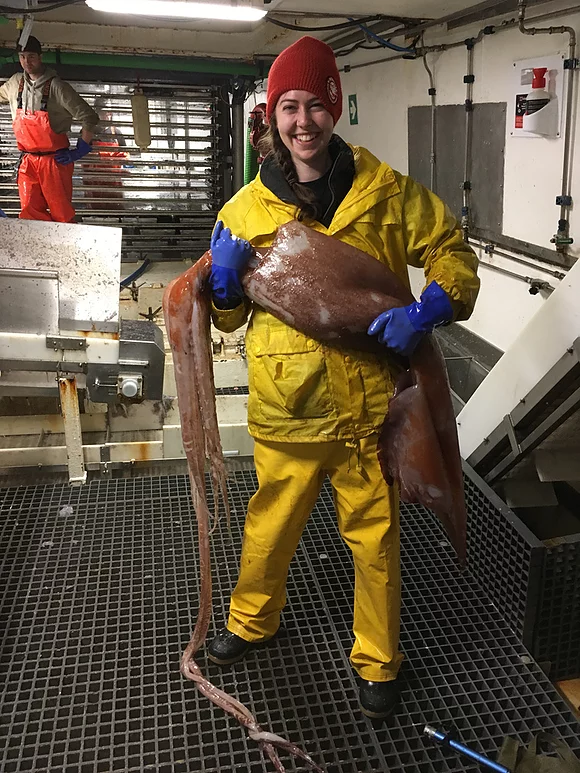
I worked on commercial fishing vessels off Vancouver Island, so I got to seem some amazing remote areas that you can only access by boat. I also got to see a lot of cool marine life.I got to see several different whale species, killer whales, sharks... also some creepy looking deep sea creatures like sea lions, otters, a 2 m long squid, giant Pacific octopus... there are so many!
But it was a really hard job; the hours were long and being out at sea for days at a time without being able to talk to friends and family was challenging. It definitely made me a stronger and more independent person. I really recommend going out of your comfort zone and taking any wild opportunity you can, no matter what sector you work in!
6. What marine wildlife should we be most concerned about?
It’s so hard to pick just one... the north Atlantic right whale is one animal that’s been in the Canadian news a lot the last few years. I think there were at least 17 that died last year out of a population of only 400-500, so it’s a huge issue. Corals are the most at-risk of any marine animal from a climate change perspective, and they’re also really sensitive to overfishing and marine pollution.
7.What was your biggest challenge when studying marine biology?
I think my biggest challenge was trying to decide what area I wanted to specialize in. The field is very broad and I find it all really interesting, so it was hard to stay focused on one area while completing my major term projects. It also can be a depressing field to learn about what is happening in the ocean, but staying optimistic is key to being successful!
8.What can we do to help keep our ocean safe?
As I mentioned before, everything is connected. Any environmentally conscious behaviour is going to make a difference, both on land and in the ocean. Try to produce less waste, take public transportation, only eat certified sustainable seafood, and encourage your friends and family to do the same!
Depending on where you’re located, there are lots of great volunteer opportunities to help clean up and preserve your local environment. You can also participate in movements like signing petitions that advocate for banning plastic straws, offshore drilling, etc. All these little things you can change in your day-to-day life really do add up!

Wonder Woman Wednesday:Interview With A Math Teacher!
I’ve been a math teacher since 2008. I went to school in Manitoba, and I’ve been teaching from the moment I graduated.
 "A lot of students struggle in math and the problem is math tends to build on itself."
 - Phebe Valani

How long have you been a teacher?
"I’ve been a math teacher since 2008. I went to school in Manitoba, and I’ve been teaching from the moment I graduated. I love what I do, I would not have wanted to do anything else. It’s exhausting at times and it’s hard towards the end of the year, but it’s
rewarding to see the kids grow. I get to explain more than school lessons to them which I enjoy. Sometimes they ask me life questions, and they know how to get me off track for a few minutes but I don’t mind."
What did you want to do when you got older?
I wanted to be a paediatrician, but in my first year of university I was studying the sciences to do my MCATS, and my mom needed to have minor surgery. I was with her for a day or so in the hospital and after that experience I don’t even like looking at my own blood!
Did you always like Math?
Yes, I did. When I switched programs, I was doing a chemistry/biology major but at the end I didn’t like the chemistry as much, but I knew I loved math! So, I majored in math and I got a degree in Mathematics and cience. Because I switched majors it took me seven years to complete my degree.
Who were your biggest role models when you were younger?
My mom would be my biggest role model. She used to be a Math teacher as well, and I liked how involved she was. She would come home early and help us with our homework. My dad got me interested in Biology and Medicine because he was a pharmacist. Pharmacists know so much about diseases and about how the body works. My parents didn’t push any profession on us, they didn’t care what we did in university as long as we got an education.
How have things changed in the classroom since you were younger?
Hmm, well the classroom has definitely changed. It is now focused on inquiry based learning. It always has to be an interactive lesson because the kids seem to have shorter attention spans. I can’t teach for a long time. It has to be 20 minute lessons and the rest of the time is spent on engaging in activities. The class is now filled with smart boards and iPads so you have to try hard and involve the students. I have to start my class with an activity or a story, I can’t just come out and say: Which is great because the kids remember it better.
What tools do you use to keep the kids engaged?
I make up the tools I use. I do the homework before I give it to them, and I base my lesson plan on what they need to learn. Teachers get to teach the curriculum in their own way and that allows us to use different tools.
Keeping it short and sweet is your best bet, but it also depends on the subject matter. Different chapters require different strategies. Some concepts require a lot of practice. Like algebra for example. For algebra, I give them a model question and then practice and I keep repeating the process until they all get it.
They often come up with their own conclusion about the lesson.Once their warm up question consisted of two tables that showed circumference and diameter. They observed on their own that every time you divide circumference by diameter you get 3.14!
I also try to stress things like estimation because it will help them use their mental math which you tend to need a bit more in real life. When it comes to homework, I try and do most of it in school because I am there.
In math class, have you found a lack of engagement from younger girls? Or a difference in performances?
That’s a hard one to answer because it changes, which makes it hard to generalize. I would have to say there are more boys that are into math on average. There is often a group of boys that are very competitive and want to do better than each other so they do very well. But then I have girls who always get 101% on tests because they are perfectionists. At this age, its not that the girls don’t like math. Some of them are already involved in drama so they don’t care about school as much…but they still do well.
What have you found makes math fun?
The kids get the most excited when they get it. A lot of students struggle in math and the problem is math tends to build on itself. So many students who struggle from the beginning of the term will continue to struggle as the year goes on. Some of them come to me during lunch time and ask for one on one help and that makes a huge difference. Because when a student gets lost early, nothing else in the subsequent lessons will make sense. So I find the most fun for them is understanding the concepts eventually! Playing games helps a bunch too! I create these games with chips or cards and they enjoy the competition. We played jeopardy and they had a lot of fun with it.
What would you say to the young kids that are preparing for the future?
I keep telling my kids to choose a career they love. It’s not about the prestige or the money. It’s about doing what you love to do. A lot of them choose things randomly and they may not know what they like. School doesn’t teach you everything you need to know but it gives you the freedom of choice to know what you DO and DON’T like. You can find out what you enjoy and pursue it. You won’t be good at everything, but you will find something you enjoy.

Take Offence Thursday:Read ALL About It!!
I think it’s important for both guys and gals to understand their history or we’ll repeat it. TOT (Take Offence Thursday) gives everyone an opportunity to see where the first wave of feminists found the courage to fight.
Feminism is often talked about as though it is an affront to all things manly. That isn't what it was meant to be. I wish there were another word for it like Flubbertin. Then I would call myself a flubbertinist. Perhaps, that way it would not offend everyone so much.
I think it’s important for both guys and gals to understand their history or we’ll repeat it. TOT (Take Offence Thursday) gives everyone an opportunity to see where the first wave of feminists found the courage to fight. It may seem like a long time ago but the balance we have now is so precarious, and the only way we can move forward is by recognizing what we originally wanted. It has to be Continuous Improvement!
The quote may sometimes be offensive but the point is to absorb it and then let it go. Which is why it is a short post! Enjoy!

In Athens, it was custom to bring up a girl using this philosophy-
Under the strictest restraint, in order that she might see as little, hear as little and ask as few questions as possible."
In 2018 it is plain to see why you may want a female population that has this mentality. Information is the only way we can make informed decisions, but if you never see or hear anything, you would always be dependent on other people to decide for you.
One of the main reasons it would be great to see more women in STEM is because it would give women more access to information and research which could bring forth more innovation than we have ever had!
Like, share and comment below!

The Secrets Out: 4 Ways Women Can Help Each Other Succeed
I did a short survey and found that the factors below were the most prominent in influencing how women perceived each other in everyday interaction.
Me: "I'm sorry we can’t fix that problem from the office. I will need to send a technician to your house."
Customer: "Oh….well, no offense but can I speak to a guy? It's not that I think you can't do your job… I just think sometimes guys are better at these things."
Well, no offence taken!" I thought!
But actually just a little offence because when the guy came, he still couldn't fix the issue! Pardon my tirade...
But after being asked this question repeatedly, I started to wonder where the idea came from. Working at a call center as technical support that was a re-occurring conversation I had. Perhaps it was my high voice that discouraged my female customers from having confidence in my technical abilities. The fascinating part was it usually only happened with women!
I realized that we may have subconscious biases that prevent us from acknowledging our own fantastic abilities as women. Whether we believe it or not, there are schema ingrained in our minds that do not come on until the odd situation calls for them. Most of these concepts have been hammered down for centuries. For example, there was the Google employee who justified not having women in engineering by stating "Men are interested in things and women are interested in people".
This post is about how women can help each other succeed in our everyday encounters. One of the most important factors is to recognize and acknowledge each other in professional and casual situations.
I did a short survey and found that the factors below were the most prominent in influencing how women perceived each other in everyday interaction.
1) Smile!
A smile is a special thing and when I get one from my fellow lady, I light up! I imagine you do too! A consistent complaint in the mini survey was that women do not receive encouraging greetings from other women. A smile is a universal sign of friendliness while a frown is commonly understood as disapproval. When we ignore each other or scowl, we are saying "I disapprove of you."
Research shows that to induce trustworthiness and bonds in other people, the use of eye contact, smiling and simple mimicry is sufficient. Similar studies show that people tend to be sensitive to those gestures that indicate trustworthiness because they imply an unselfish vulnerability. The study interpreted these tendencies as the basic need to understand others intentions and reciprocate.
Long story short, if you smile at a lady you show that you share a bond that is not only friendly but supportive in a sense. In a world where women are constantly scrutinized, there is such a need to show support for each other! Smiling will increase female morale all over the world! JAnd don't worry if your fellow woman does not smile back at first. It may take some getting used to!

2) Be Confident In Yourself!
Most women are under constant pressure to prove themselves. One study showed that when women were subjected to higher standards, they under performed. There is no reason for this except that stereotype threats prevent us from reaching our full potentials. Stereotype threats are prejudices that can often affect our performance while working under pressure regardless of whether they are positive or negative. Don't let preconceived notions stop you from being the best you can be! If you've been hired to do a job, chances are you have a little bit of an idea of what to do. Be confident in this! And if you are unsure, don't panic! Just learn and keep adding to your information so you can complete the task at hand.

Most errors either stem from a lack of accurate information or misinterpretation of correct information! Gathering more material and evidence will allow you to make smaller mistakes in the long run. Be confident in what you know and it will help women everywhere see that we are more than the world can contain!
3) Avoid Catty Competition!
Have you ever seen two lions competing for food in the wild? It's hostile, it's rude and it's violent. Women compete using other techniques but it can be just as ferocious. A great way to help each other succeed is to compete less for the superficial things and fight for the good of women around us. There is no way we can fight together if we are always at odds. In the past few months' women have come together in a way that we've never seen before with the "Me too" campaign and it's phenomenal! To keep this going, I request that we compete for awareness and innovation more than anything else. Focusing on research, science, problem-solving, kindness and any other wonderful conception is the only way forward! That way we can help each other move ahead instead of holding each other back.
4) Be Confident in Other Women's Abilities

Having confidence in yourself is essential but placing confidence in others is a great way to encourage your peers. We must have confidence in our fellow women to do what they say they can. When I would get those calls at the call center, it would be like the customer was saying "I DO NOT THINK YOU ARE CAPABLE!" We will never get to a place of true equality if our own internal barriers prevent us from having confidence in our peers. And if your fellow lady makes a mistake, remember that it happens to the best of us! Men and women alike.
We are always stronger together than we are divided and this goes for men, women and even wild animals. The true measure of equality can only be understood when women are their own advocates. There are still common misconceptions about the abilities of women and much of these ideas stem from cultural backgrounds that have been re-enforced for decades.
MUST READ: Top 4 Reasons Why Women Should Be In STEM
The wake of the 21st century has seen more development in technology than we are willing to admit. Here are some of the newest innovations coming out of the STEM world
The wake of the 21st century has seen more development in technology than we are willing to admit. Here are some of the newest innovations coming out of the STEM world, just to name a few:
TESLA’s electric, self-driving car.
Hover Boards
Facebook
Netflix
The Apple Watch
Doc from Back to The Future would probably agree that we are well into our flying cars stage. With all these advances, it is important to note that none of those inventions were made by women and there is where the problem lies.
A study found that women account for only 8% of all patent holders and even less in places like Germany (3.2%). Amazingly enough, the research shows much of the disparity involves the lack of women in engineering, science and development positions. In the next few years, the STEM fields will become increasingly important as we move toward one of the most technological evolutions in history.
4 Basic Reasons Why We Need More Women In STEM
1) Social Impact
Understanding why women choose certain careers is a subject long studied. We know that having a positive social impact is a strong motivator for why women adopt a certain career. Despite the stigma that disconnects the STEM fields from social impact, it is no accident that most inventions are created by men in the engineering and science fields.
The reason is because these professions learn to design and create solutions out of real world dilemmas. The STEM fields do have great social impact and they tend to solve problems we face in day to day life. More women in the STEM fields would see to it that we had greater social impact in a world where the hardest thing to do is empathize.
2) Diverse Spin on New Inventions
In my past design projects, I have often had to work with large groups of young men and I was the only lady. I enjoyed it and learned a lot about how similarly we all interact with each other! However, I did realize that we thought very different when it came to new ideas. Almost opposite at times.
Through history, our differences have been painted as a negative but I dare to argue that our differences are imperative to the betterment of mankind! Women are phenomenal creatures who have phenomenal perspectives and if we all work together, perhaps we will find solutions we never thought possible. Women could bring in diverse ideas that might have never even been contemplated before.
3) Future Jobs!
As the climate shifts and we change, the human experience is becoming more and more digital with less reliance on traditional practices such as postal delivery services or “snail mail”. With these changes, we see a drift toward information technology and that is where most of the jobs of the future will come from. I would love it if women could be at the fore-front of running the future managerial job market! Below is a chart highlighting the jobs of the future (it does not include medical fields because that is a whole other chart)
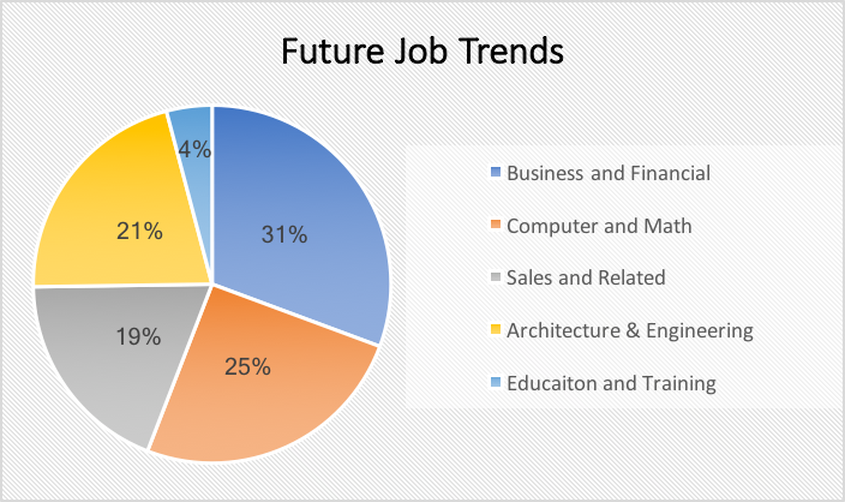
Add up some numbers and the chart above shows that 46% of the jobs will be in STEM related fields which is a large percent of employment opportunities. And with the exception of financial mangers and Wall Street moguls, the jobs left are mostly stuck in sales which generally do not pay as much.
4) School Of Thought
Engineering is often painted as a profession routed only in numbers but that is hardly the case! I would say the main job an engineer has is using numbers and science to solve any given problem! It is where innovation lives! Now those problems are often connected to machinery and infrastructure but the problem you could be facing could be anything from uncomfortable heels to renovating a flooded basement. Whatever the problem, it takes a certain level of creativity to suggest a solution. I think increasing more women in STEM will introduce a level of creativity that we may have never envisioned. It will also help women in terms of understanding risk and thinking critically.
Have you noticed an increase in women in your fields? And how do you think it affects your work environment? I love having discussions so please Comment, Like & Share!
Written By: Jennifer Ladipo